Race Overview: Clean, Competitive Chaos at Charlotte
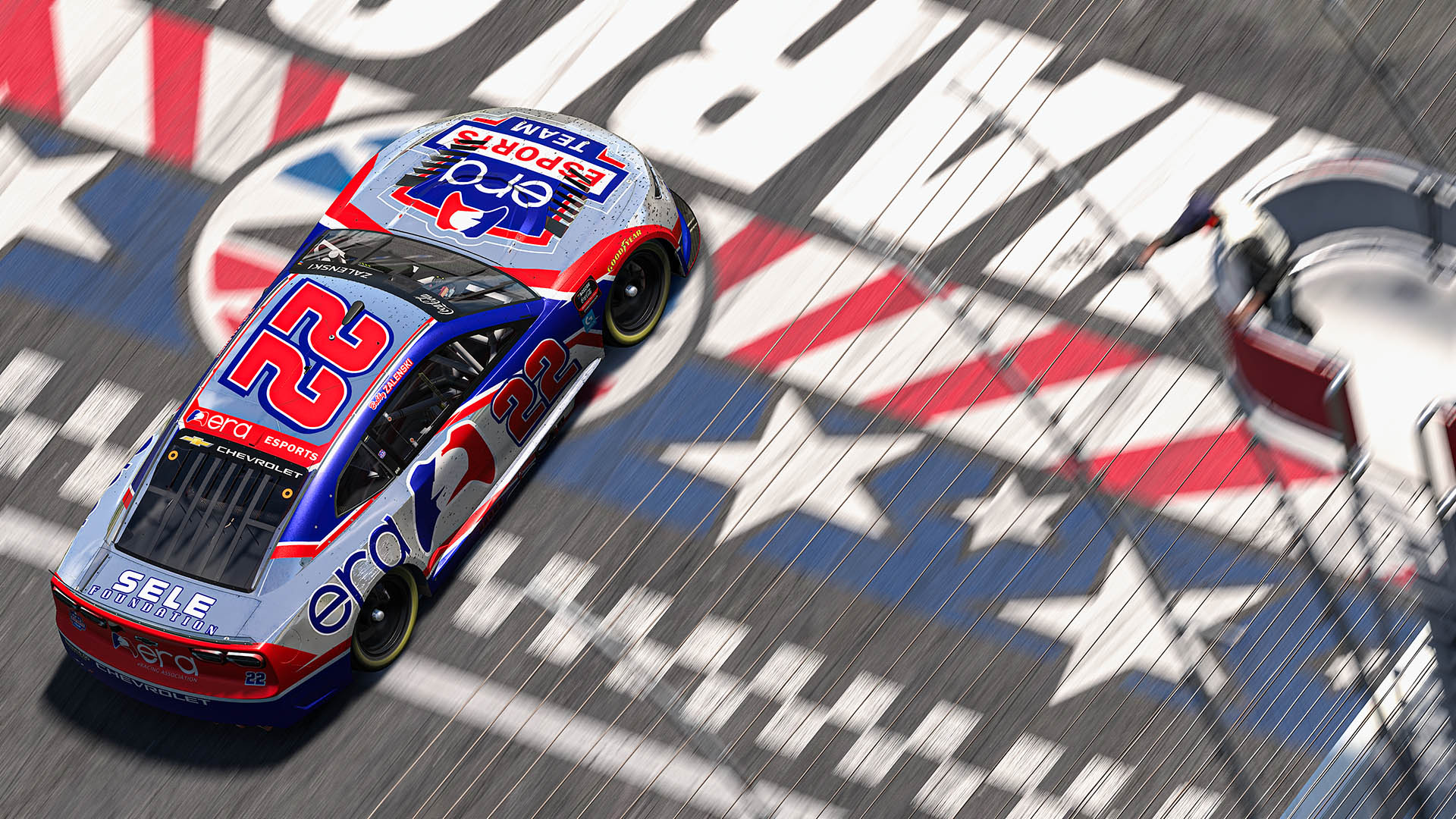
Bobby Zalenski claimed his first-ever season-opening victory in the 2026 eNASCAR Coca-Cola 160 at Charlotte Motor Speedway on Tuesday night, securing his 19th career eNASCAR Coca-Cola iRacing Championship Series win. Starting from pole position, Zalenski dominated the Coca-Cola 160 with a masterful display of racecraft and strategy, leading 65 of 160 laps and managing a late-race duel with fellow ERA eSports teammate Tucker Minter before fending off defending champion Steven Wilson’s furious final-lap assault.
What made Zalenski’s victory truly remarkable was the quality of the race itself. The entire 160-lap event ran under green flags; not a single caution materialized across the entire distance. With 40 cars on track at Charlotte Motor Speedway, a caution-free race is a statistical rarity that speaks to both driver skill and competitive maturity. All 40 starters finished the race, with 33 completing it on the lead lap. Zero speeding penalties were issued on pit road across all pit stops, a stunning statistic that underscores the precision and execution of both drivers and pit crews.

This was a race that demanded respect from every competitor on the grid, and Zalenski delivered a response worthy of his 10-year winning streak. For a veteran entering his 10th season of eNASCAR competition, claiming a season-opening victory was the statement he needed to make entering 2026.
Strategy Decides the Win: The Final Pit Cycle
The decisive moment of the Coca-Cola 160 came not in a dramatic on-track pass, but in the calculated decisions made during the final green-flag pit cycle starting at Lap 108. This sequence would reshape the final stint and ultimately decide the race.
Tucker Minter, running in second place and driving for William Byron eSports, committed to the undercut strategy first. Minter pitted on Lap 108, gambling that track position surrendered now could be reclaimed through fuel and tire advantage in the final laps. Bobby Zalenski responded two laps later on Lap 110, but the timing allowed Minter to rejoin ahead of him, alongside Christopher Hill and ERA eSports teammate Michael Cosey Jr.
Defending champion Steven Wilson played the waiting game. Rather than pit early, Wilson stayed out longer, banking that the lack of pit stops would preserve his track position. When Wilson finally pitted on Lap 117, he made a bold gamble: two-tire service only, minimal fuel, all-in on the strategy that track position and fuel economy would carry him to the win. It was precisely the kind of aggressive call Wilson has made throughout his career, a calculation that separates champions from contenders.
Once the pit cycle completed, Minter inherited the lead. But behind him, Zalenski was closing. And further back, Wilson was charging on his two-tire advantage. The stage was set for a final 43 laps of escalating tension.
Zalenski vs. Minter: Teammates Battle for the Lead
Despite sharing ERA eSports’ backend setup alliance, Zalenski and Minter raced with the intensity of bitter rivals during the final stint. Minter had no intention of surrendering the lead easily. For 12 laps, the two danced, with Zalenski making increasingly aggressive attempts to clear his teammate.
The breakthrough came with a slider pass, a classic esports racing move where Zalenski dove to the inside and outbraked Minter through the corner. For a moment, Zalenski had the lead. But Minter responded immediately, using superior corner exit speed to reclaim position on the straightaway. The two continued their battle, lap after lap, each driver probing for an advantage while simultaneously aware that a third threat loomed: Steven Wilson, methodically closing the gap behind them.
Zalenski’s post-race perspective on the battle revealed the psychological toll. “I was really killing myself trying to pass Tucker,” Zalenski reflected. “I saw Steven coming, he did the two-tire strat, which I’m surprised he made it work so well on those left sides… I was hoping we wouldn’t slow each other down so much to both lose the win there.” The comment underscored the delicate balance of close racing at the front: victory requires not just beating one competitor, but managing multiple threats simultaneously.
With 18 laps remaining, Zalenski finally cleared Minter for good. The move came after an aggressive sequence where Zalenski committed to the inside line and would not yield, muscling his way past his teammate through the technical middle section of the track. Minter, sensing the inevitability, fell back and focused on holding third place against the charging Wilson.
Wilson’s Charge Falls Short: Fuel Drama on the Final Lap
Steven Wilson’s two-tire gamble delivered results. By Lap 145, the defending champion had dispatched Minter and was closing rapidly on Zalenski, now running just seconds behind. With 15 laps remaining, Wilson moved into second place and began pressuring the leader. A Wilson victory would have tied him with Zalenski on the all-time wins list at 19 victories each, a statistical symmetry that would have made for a compelling narrative heading into the season.
Zalenski, however, held firm. Despite Wilson’s superior momentum and increasingly desperate inside-line attempts, Zalenski refused to yield. Lap after lap, Wilson dove to the inside; lap after lap, Zalenski held the racing line and summoned enough pace to stay ahead. The final laps became a study in attrition and risk management; both drivers were pushing the absolute limit, knowing that one mistake would decide the race.
Then came Lap 160, the final circuit. As Wilson made one last push toward the victory, his car suddenly went silent on corner exit. He had run out of fuel. The governing constraint of sim racing, where every lap matters and every decision ripples forward, had caught the defending champion.
Christopher Hill, who had been running solidly in third place, suddenly found clear track ahead as Wilson’s car slowed dramatically. Hill inherited second place with the momentum to close on Zalenski, but one lap was not enough. Zalenski crossed the finish line 0.522 seconds ahead of Hill, with Wilson limping home in third place, 1.203 seconds back, a heartbroken victim of a fuel miscalculation.
Zalenski’s post-race quote captured the dramatic nature of that final moment: “I’m glad the race wasn’t seven more laps, I would have been passed by Chris (Hill) probably.” The comment spoke to how close the margin was, how little separated victory from defeat in a 160-lap chess match decided by fuel, strategy, and mental fortitude.
For Wilson, the fuel mistake stung immediately. A victory would have begun his championship defense with momentum and demonstrated continuity with his 2025 form. Instead, he would spend the next weeks analyzing how that gamble played out, learning the hard lesson that two-tire strategies, even when executed by a champion, carry risk. The fuel indicator is unforgiving in sim racing.
A Clean, Historic Race
The Coca-Cola 160 will be remembered as one of the cleanest and most professionally executed races in recent eNASCAR championship history. Beyond the obvious statistic of a caution-free 160-lap race with zero pit road penalties, what stood out was the consistent quality of competition and racecraft.
Despite a chaotic start that damaged several cars, no caution flag was ever needed. Casey Kirwan, Parker White, and Dylan Ault each sustained damage in the opening laps when the field compressed entering the first turn. Yet all three drivers managed to continue, nursing their damaged equipment through 160 laps rather than requiring debris cleanup or extended repair time under yellow. This speaks to both driver resilience and the robustness of iRacing’s damage model.
Seven drivers led laps: Zalenski (65), Minter (45), Logan Helton (23), Connor Yeroschak (14), Steven Wilson (10), Garrett Lowe (2), and Seth Noell (1). This distribution suggests a field where no single driver or team held overwhelming advantage, where strategy and execution mattered equally to raw pace, and where opportunities existed for drivers across the grid to take advantage of good pit cycles or track position management.
Zalenski, speaking after his victory, expressed pride in the race’s cleanliness: “Caution-free, went out and just won it on merit. I could not have wanted more.” For a veteran driver accustomed to navigating the chaos of multi-car racing, a clean victory provided validation that his speed and racecraft were not dependent on attrition or fortune, but on superior execution.
Zalenski’s Growing Legacy: 19 Wins and Counting
Bobby Zalenski’s 19th career eNASCAR Coca-Cola iRacing Championship victory places him squarely at the apex of active-driver win totals in the 2026 season. His total sits two wins ahead of both Ryan Luza and defending champion Steven Wilson, each of whom has 17 career victories. This season-opening triumph at Charlotte Motor Speedway also marks Zalenski’s 10th consecutive season with at least one victory, a streak that underscores remarkable consistency and competitive excellence across a full decade of eNASCAR competition.
Yet for all his individual dominance, Zalenski’s career narrative has been defined by a single, glaring absence: a championship title. Despite making every Playoffs appearance since the format debuted in 2017, Zalenski has reached the Championship 4 Finale six times without hoisting the Dale Earnhardt Jr Cup. He has finished runner-up multiple times and has tasted victory in almost every significant race context. The Dale Jr Cup, however, has eluded him. This season-opening victory, while significant, will be remembered primarily as a chapter in that larger, ongoing narrative.
The path forward is clear. Zalenski’s next target is Nick Ottinger’s all-time second-place record of 20 career wins. Beyond that sits Ray Alfalla’s all-time record of 27 career victories, a mark that would require Zalenski to sustain his current winning pace for another 8 seasons. These are the mathematical benchmarks, but they pale in comparison to the psychological weight of the championship drought.
Zalenski enters the 2026 season with fresh urgency. He is a veteran driver in his 10th year of championship competition, an age at which windows of opportunity begin to close. The consistency is there; the speed is there; the racecraft is undeniable. What remains is the title, and every race, every playoff appearance, every championship run carries added significance in the context of that quest.
Rookies and Rising Stars Make Their Mark
The 2026 eNASCAR Coca-Cola iRacing Championship season opened with nine rookies on the grid, an influx of fresh talent that could have invited chaos or safety concerns. Instead, the rookie class delivered a professional, clean race that underscored the evolving maturity of the eNASCAR competitive ecosystem at Charlotte Motor Speedway.
Two rookies made significant on-track impacts. Logan Helton, competing for eRacr, led 23 laps by employing a stay-out strategy during pit cycles, a tactical move that demonstrated both bravery and racecraft. Helton’s final finishing position of 34th reflected the relentless attrition of a 160-lap race, but his laps led marked him as a driver worth watching moving forward. Seth Noell, also of eRacr, contributed to his team’s success by leading one lap, adding to his team’s presence at the front of the field.
Among the rookie points-scoring positions, Sebastian Marin of Kanaan Esports emerged as the top rookie performer, finishing 14th and accumulating 23 points in the Rookie Standings. Shawn Conklin of RFK Racing finished 15th, earning 22 points and positioning himself second in the rookie race. Both drivers demonstrated the consistency required to compete at the elite level, finishing ahead of the cutoff for playoff points and establishing themselves as contenders in the Rookie of the Year race that will play out across the season.
Zalenski acknowledged the rookie class’s professionalism in his post-race remarks: “Shout out to all the noobs, right? We had nine noobs (rookies) and we had no cautions. Shout out to everybody. It was a really good race, from start to finish.” The comment spoke to Zalenski’s respect for the competitors entering the series and his appreciation that their integration into the grid did not compromise the race’s quality or safety.
Standings After Race 1
Driver Standings
| Position | Driver | Team | Points | Wins | Poles | Top 5 |
|---|---|---|---|---|---|---|
| 1 | Bobby Zalenski | ERA eSports Team | 40 | 1 | 1 | 1 |
| 2 | Christopher Hill | William Byron eSports | 35 | 0 | 0 | 1 |
| 3 | Steven Wilson | Spire Motorsports | 34 | 0 | 0 | 1 |
| 4 | Tucker Minter | William Byron eSports | 33 | 0 | 0 | 1 |
| 5 | Wyatt Tinsley | Kansas City Pioneers | 32 | 0 | 0 | 1 |
| 6 | Donovan Strauss | Williams F1 Team Gaming | 31 | 0 | 0 | 0 |
| 7 | Seth DeMerchant | fgrAccel | 30 | 0 | 0 | 0 |
| 8 | Michael Cosey Jr | ERA eSports Team | 29 | 0 | 0 | 0 |
| 9 | Connor Yeroschak | Letarte eSports | 28 | 0 | 0 | 0 |
| 10 | Blake Reynolds | Channel 199 Sim Racing | 27 | 0 | 0 | 0 |
Playoff Cutoff: Top 10 drivers qualify for the Playoffs. Blake Reynolds currently holds the 10th and final spot with 27 points. Eight races remain in the regular season before the Playoffs are locked.
Team Standings
| Position | Team | Drivers (Entries) | Points | Wins |
|---|---|---|---|---|
| 1 | ERA eSports Team | 22/34 | 69 | 1 |
| 2 | William Byron eSports | 25/97 | 68 | 0 |
| 3 | Spire Motorsports | 37/77 | 55 | 0 |
| 4 | Kanaan Esports | 11/66 | 49 | 0 |
| 5 | fgrAccel | 12/14 | 47 | 0 |
| 6 | Channel 199 Sim Racing | 86/199 | 46 | 0 |
| 7 | Kansas City Pioneers | 20/24 | 44 | 0 |
| 8 | JR Motorsports | 8/88 | 42 | 0 |
| 9 | RFK Racing | 6/17 | 35 | 0 |
| 10 | Williams F1 Team Gaming | 4/95 | 32 | 0 |
ERA eSports Team leads the Team Standings by one point over William Byron eSports. Both teams will be competitive contenders throughout the season.
Rookie Standings
| Position | Rookie Driver | Team | Points | Best Finish |
|---|---|---|---|---|
| 1 | Sebastian Marin | Kanaan Esports | 23 | 14 |
| 2 | Shawn Conklin | RFK Racing | 22 | 15 |
| 3 | Matthew Morton | TC Racing | 14 | 23 |
| 4 | Dylan Basen | RFK Racing | 13 | 24 |
| 5 | Kenny Brady | Team Dillon Esports | 9 | 28 |
| 6 | Tommy Gossett | Vegas Inferno | 8 | 29 |
| 7 | Seth Noell | eRacr | 6 | 31 |
| 8 | Logan Helton | eRacr | 3 | 34 |
| 9 | Thomas Lloyd | Letarte eSports | 2 | 35 |
Rookie of the Year Race: Sebastian Marin and Shawn Conklin have separated themselves early with 23 and 22 points respectively. The gap to third-place Matthew Morton (14 points) is significant, but the rookie race will remain competitive throughout the season.
Complete Race Results: All 40 Finishers
| Position | Driver | Team | Start | Laps | Led | Best Lap | Points |
|---|---|---|---|---|---|---|---|
| 1 | Bobby Zalenski | ERA eSports Team | 1 | 160 | 65 | 29.767 | 40 |
| 2 | Christopher Hill | William Byron eSports | 6 | 160 | 0 | 29.648 | 35 |
| 3 | Steven Wilson | Spire Motorsports | 7 | 160 | 10 | 30.037 | 34 |
| 4 | Tucker Minter | William Byron eSports | 3 | 160 | 45 | 29.726 | 33 |
| 5 | Wyatt Tinsley | Kansas City Pioneers | 16 | 160 | 0 | 30.004 | 32 |
| 6 | Donovan Strauss | Williams F1 Team Gaming | 10 | 160 | 0 | 29.743 | 31 |
| 7 | Seth DeMerchant | fgrAccel | 2 | 160 | 0 | 29.887 | 30 |
| 8 | Michael Cosey Jr | ERA eSports Team | 8 | 160 | 0 | 30.160 | 29 |
| 9 | Connor Yeroschak | Letarte eSports | 4 | 160 | 14 | 29.988 | 28 |
| 10 | Blake Reynolds | Channel 199 Sim Racing | 40 | 160 | 0 | 29.875 | 27 |
| 11 | Vicente Salas | Kanaan Esports | 5 | 160 | 0 | 29.682 | 26 |
| 12 | Garrett Lowe | BS+COMPETITION | 15 | 160 | 2 | 30.078 | 25 |
| 13 | Zack Novak | JR Motorsports | 11 | 160 | 0 | 29.941 | 24 |
| 14 | Sebastian Marin [R] | Kanaan Esports | 9 | 160 | 0 | 29.959 | 23 |
| 15 | Shawn Conklin [R] | RFK Racing | 13 | 160 | 0 | 29.892 | 22 |
| 16 | Femi Olatunbosun | Spire Motorsports | 21 | 160 | 0 | 30.037 | 21 |
| 17 | Quentin Warman | Hyak Motorsports | 17 | 160 | 0 | 29.936 | 20 |
| 18 | Dylan Duval | Channel 199 Sim Racing | 27 | 160 | 0 | 29.869 | 19 |
| 19 | Malik Ray | JR Motorsports | 36 | 160 | 0 | 29.988 | 18 |
| 20 | Ryan Luza | fgrAccel | 25 | 160 | 0 | 29.816 | 17 |
| 21 | Nate Stewart | Jim Beaver eSports | 37 | 160 | 0 | 29.686 | 16 |
| 22 | Kollin Keister | Jim Beaver eSports | 12 | 160 | 0 | 29.851 | 15 |
| 23 | Matthew Morton [R] | TC Racing | 33 | 160 | 0 | 29.883 | 14 |
| 24 | Dylan Basen [R] | RFK Racing | 18 | 160 | 0 | 29.969 | 13 |
| 25 | Casey Kirwan | Kansas City Pioneers | 35 | 160 | 0 | 29.967 | 12 |
| 26 | Jake Nichols | TC Racing | 24 | 160 | 0 | 29.977 | 11 |
| 27 | Cody Byus | Apex Racing Team | 29 | 160 | 0 | 29.865 | 10 |
| 28 | Kenny Brady [R] | Team Dillon Esports | 32 | 160 | 0 | 30.014 | 9 |
| 29 | Tommy Gossett [R] | Vegas Inferno | 40 | 160 | 0 | 30.051 | 8 |
| 30 | Daniel Faulkingham | Rick Ware Racing | 28 | 160 | 0 | 29.989 | 7 |
| 31 | Seth Noell [R] | eRacr | 23 | 160 | 1 | 30.117 | 6 |
| 32 | Michael Guest | Vegas Inferno | 31 | 160 | 0 | 30.076 | 5 |
| 33 | Jordy Lopez | BS+COMPETITION | 26 | 160 | 0 | 30.084 | 4 |
| 34 | Logan Helton [R] | eRacr | 20 | 159 | 23 | 30.082 | 3 |
| 35 | Thomas Lloyd [R] | Letarte eSports | 19 | 159 | 0 | 30.105 | 2 |
| 36 | Blaze Crawford | Team Dillon Esports | 34 | 159 | 0 | 30.017 | 1 |
| 37 | Ryan Doucette | Apex Racing Team | 14 | 159 | 0 | 29.997 | 0 |
| 38 | Parker White | Williams F1 Team Gaming | 16 | 159 | 0 | 30.074 | 0 |
| 39 | Dylan Ault | Hyak Motorsports | 38 | 159 | 0 | 30.143 | 0 |
| 40 | Garrett Manes | Rick Ware Racing | 15 | 157 | 0 | 29.894 | 0 |
Race Notes: The Coca-Cola 160 ran caution-free, all 40 starters finished the race, and 33 cars completed it on the lead lap. Zero speeding penalties were issued on pit road. [R] denotes rookie drivers.
What’s Next: Echo Park Awaits
The 2026 eNASCAR Coca-Cola iRacing Championship Season continues with Race 2 at Echo Park Speedway on June 2, 2026. Countdown to Green begins at 7:45 PM ET, with race coverage starting at 8:00 PM ET on eNASCAR.com/live and iRacing’s social media channels.
Echo Park holds historical significance for the series. The track was the site of Malik Ray’s first-ever eNASCAR career victory in 2024, a triumph that launched Ray into championship contention and eventually earned him a berth in the 2025 eNASCAR Championship 4. Now Ray returns to Echo Park as part of the newly constructed JR Motorsports roster, positioned alongside Zack Novak as part of a veteran powerhouse pairing intended to challenge defending champion Steven Wilson’s championship defense.
For Bobby Zalenski, Echo Park represents an opportunity to build on his season-opening momentum in the 2026 eNASCAR season. Eight races remain before the playoff cutoff; every point and every finish will matter as drivers jostle for the top 10 positions that earn playoff qualification. Zalenski’s commanding five-point lead over Christopher Hill suggests momentum, but consistency over the remaining races will determine whether this season finally delivers the championship title that has eluded him through six prior eNASCAR Championship 4 appearances.
For Steven Wilson, the fuel miscalculation and third-place finish at Charlotte Motor Speedway serve as an immediate wake-up call. A defending champion cannot afford to surrender races to strategy mistakes; the 2026 championship landscape is too competitive, and the margin for error too thin. Wilson will have two weeks to regroup, analyze the race data, and prepare for Echo Park with renewed focus.
The 2026 eNASCAR Coca-Cola iRacing Championship is underway. The Coca-Cola 160 at Charlotte established Zalenski as the early favorite and raised questions about Wilson’s ability to repeat his championship. Eight more regular-season races will follow, each one an opportunity for drivers to prove their mettle, accumulate points, and position themselves for the three-race playoff gauntlet and eventual Championship 4 showdown.