
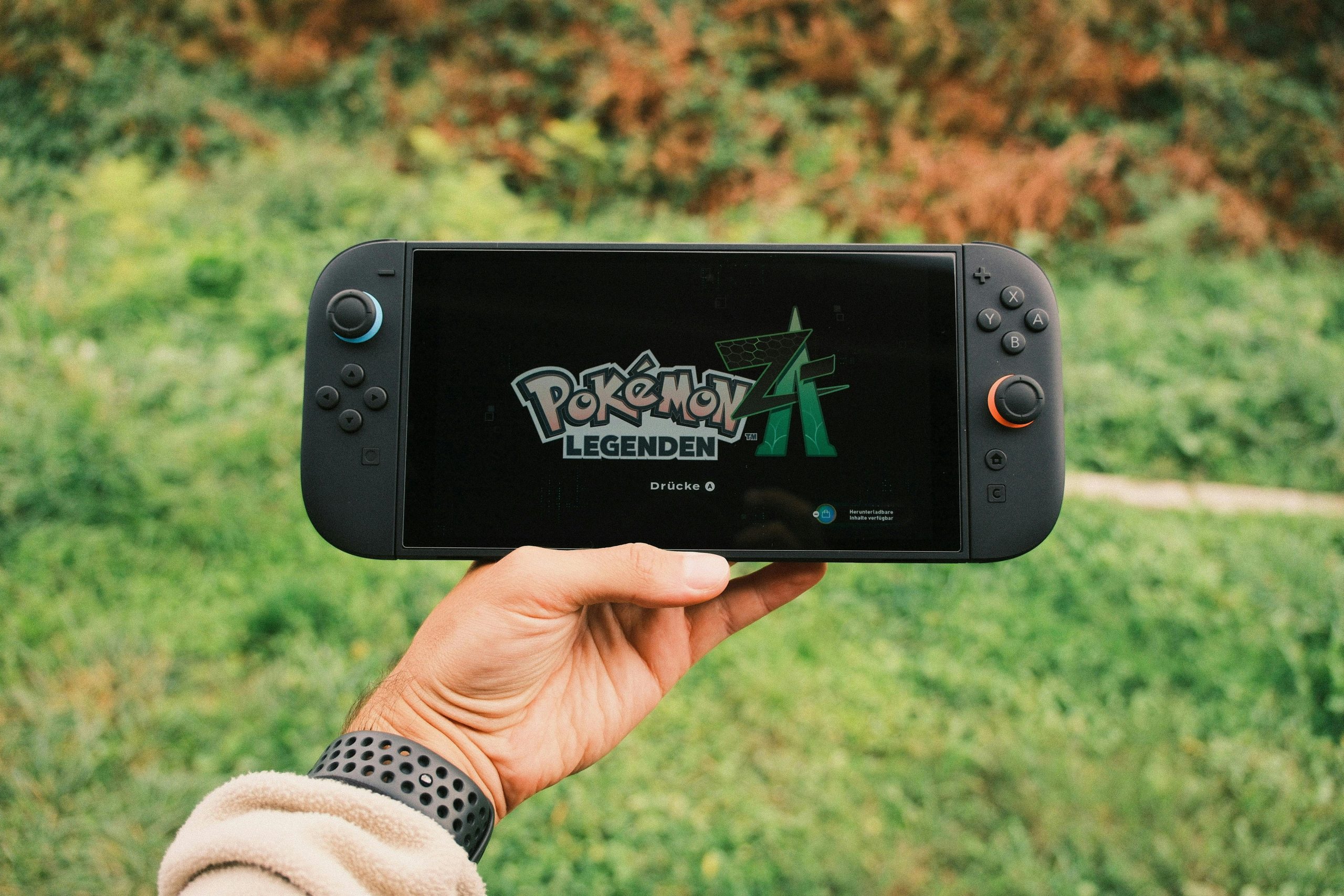
The first major system seller for Nintendo’s new hardware has arrived — and the numbers are already historic.
Reading time: ~6 minutes
If you had any doubt that Nintendo’s next chapter would land with force, Pokémon Pokopia just erased it. Launched on March 5, 2026 , the game moved 2.2 million copies globally in its first four days — a number that cements it not just as a Pokémon milestone, but as the clearest signal yet that the Nintendo Switch 2 is off to a commercial start that even the most bullish analysts would have called aggressive.
Nintendo is not playing defense. According to Bloomberg , the company is targeting production of 25 million Switch 2 units by the end of March 2026 . That is an extraordinary supply commitment — one that tells you everything about how confident Kyoto is in what they’ve built.
The Numbers in Context
Two-point-two million copies in four days sounds impressive in isolation. It becomes jaw-dropping when you place it next to the franchise’s own history.
Pokémon Scarlet and Violet , the previous mainline entries, sold 10 million copies in their first three days globally — a record-setter at launch. But those games dropped on a platform that had already been in living rooms for five years, with an installed base north of 140 million units . Pokopia is selling into a hardware cycle that is, by definition, still building its audience.
That context makes 2.2 million in four days a different kind of achievement. It is not just a software win — it is a system seller performing its function in real time. Every Pokopia sale is, for a meaningful slice of buyers, also a Switch 2 sale. Nintendo knows this. It is why the production target of 25 million units reads less like a forecast and more like a declaration.
“Nintendo is aiming to produce 25 million Switch 2 units by end of March 2026.” — Bloomberg
What Makes Pokopia Different
The Pokémon franchise has sold over 480 million games worldwide since 1996. At this point, a new mainline entry practically prints money by existing. But Pokopia is not simply trading on nostalgia and brand recognition — early reporting and community reaction suggest it is doing something more deliberate: it is designed to show off what Switch 2 hardware can actually do.
For a franchise that spent years absorbing criticism over technical performance — and Scarlet and Violet in particular took a beating for frame rate issues and visual rough edges — a Pokémon game that runs beautifully on new hardware is not a small thing. It is a course correction. It is Game Freak and The Pokémon Company sending a message that they heard the complaints, and the Switch 2 is their answer.
The System Seller Equation
In console history, certain games function as hardware accelerants. Halo for the original Xbox. Wii Sports for the Wii. The Legend of Zelda: Breath of the Wild for the original Switch. These titles do not just sell — they justify the purchase of the machine they run on.
Pokopia is auditioning for that role on Switch 2, and the early sales data suggests it is getting the part. A 2.2 million opening on a console still ramping up its installed base is structurally different from posting the same number on a mature platform. The ratio matters. The implication matters.
Nintendo’s 25 million unit production target is the hardware-side confirmation of that thesis. You do not commit to that kind of manufacturing output unless demand signals are strong and your software pipeline is giving consumers a reason to buy in.
Nintendo’s Bigger Bet
The Switch 2’s commercial launch is not happening in a vacuum. The original Nintendo Switch, released in March 2017 , became one of the best-selling consoles of all time — crossing 146 million units sold before its successor arrived. That is a long, successful run, and it creates both an opportunity and a challenge for the sequel.
The opportunity: a massive installed base of loyal Nintendo fans primed to upgrade. The challenge: those fans already have years of Switch games, and the pitch for “new hardware” has to be stronger than incremental improvements.
What Nintendo appears to be doing — and what Pokopia supports — is leading with software prestige. Give players a game they cannot get elsewhere, a game that feels genuinely next-generation within Nintendo’s design philosophy, and the hardware argument makes itself. It is the same playbook that worked in 2017, when Breath of the Wild launched alongside the original Switch and functioned as a living proof-of-concept for the new machine.
The Production Commitment
Targeting 25 million units by end of March 2026 is not a conservative hedge — it is an aggressive supply-side bet. For comparison, the original Switch sold approximately 14.86 million units in its entire first fiscal year . If Nintendo hits its reported target, Switch 2 would be on track to significantly outpace its predecessor’s early trajectory.
That ambition carries risk. Semiconductor supply chains remain complicated. Consumer electronics production at scale is never guaranteed. But the fact that Nintendo is publicly associated with that target — whether through its own statements or Bloomberg’s sourcing — signals a confidence level that the company would not project if the early data did not support it.
What the Community Is Watching
For the enthusiast crowd, the next benchmarks are clear:
- Pokopia’s 30-day sales figure — does it sustain momentum or front-load, and how does it compare to Scarlet and Violet’s full launch window?
- Switch 2 hardware sales data — Nintendo’s fiscal year ends March 31, 2026, making the next earnings report an early scoreboard for the new platform.
- The software pipeline — what is the next major title behind Pokopia, and how quickly does Nintendo build out a release calendar that keeps Switch 2 hardware moving?
- Regional breakdown — 2.2 million globally is the headline; the split between Japan, North America, and Europe will reveal where the franchise’s gravitational pull is strongest on new hardware.
- The 25 million unit production target — whether Nintendo ships close to that figure by end of March will be the clearest early indicator of whether Switch 2 is a repeat performance or something bigger.
The broader gaming industry is watching closely too. A strong Nintendo hardware launch, powered by a proven franchise, reinforces that dedicated gaming hardware still has a pulse in a market increasingly fragmented by mobile, cloud streaming, and subscription services. If Switch 2 posts the kind of numbers its production targets suggest, it is a data point that matters well beyond Nintendo’s quarterly report.
The Bottom Line
Thirty years into its existence, Pokémon can still move markets. 2.2 million copies of Pokémon Pokopia in four days is not just a franchise flex — it is the opening argument in the Switch 2’s case for dominance. Nintendo has seen this movie before, knows how it ends when the software-hardware combination is right, and is betting 25 million units that history is about to repeat itself.
The Pokédex has always been about completion. Right now, Nintendo’s Switch 2 launch checklist is looking very full, very fast.