
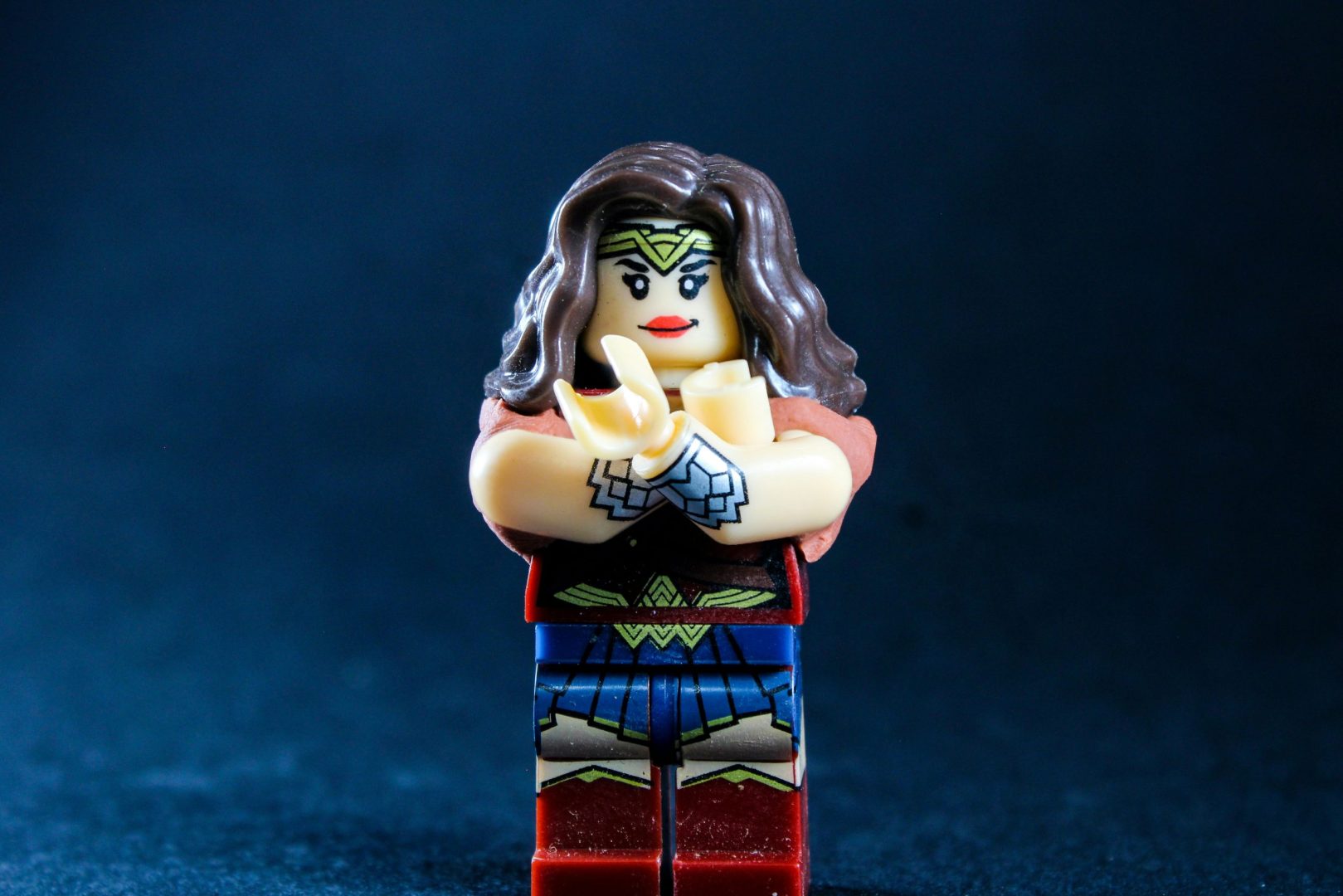
DC’s Absolute Universe has rewritten the commercial and creative playbook for superhero comics. At the center of it all sits Kelly Thompson’s Absolute Wonder Woman — a brutal, tender, mythology-soaked masterpiece that just delivered one of the best single issues of 2026 in its Annual. If you’re not reading it, here’s everything you need to know, and why you should start today.
Estimated reading time: 7 minutes
A Publishing Phenomenon With a Crown Jewel
Something genuinely rare has happened in mainstream superhero comics. A line launched without legacy baggage, without decades of continuity to untangle, without the exhausted promise of “everything changes now” — and it actually delivered. DC’s Absolute Universe arrived in October 2024 under the DC All In banner, and the industry has not stopped talking about it since.
The numbers alone are staggering. The Absolute line has moved over 8.5 million units , outperforming both the New 52 and Rebirth launches in comparable windows. 14 of the 20 best-selling comics of 2025 were Absolute titles. Absolute Batman #1 hit roughly 250,000 copies , went through 11+ printings , and has accumulated nearly 3 million copies combined . These are numbers that make publishers sit up very straight.
But sales figures only tell part of the story. The real secret is that the Absolute line isn’t just selling — it’s good . Genuinely, consistently, argument-starting good. And of all its titles, Absolute Wonder Woman is the one that has earned the most breathless praise from critics, readers, and the comics industry alike.
What Is the Absolute Universe, Exactly?
The core pitch of the Absolute Universe is elegantly simple: take DC’s biggest heroes, strip away their privilege, and see what remains. No Wayne fortune for Bruce. No golden childhood on Themyscira for Diana. No Kryptonian aristocracy for Kal-El. These are characters defined by their circumstances in ways the main DC timeline never allowed, reshaped by hardship without losing the moral cores that make them worth writing about.
Structurally, the universe runs parallel to DC’s main continuity — think of it as a distinct publishing imprint rather than a reboot or retcon. The connective tissue is Doomsday Energy , a mysterious force threading through the line and building toward larger crossover implications. But each title functions as a strong standalone read, which is exactly why new readers have flooded in.
The line launched with titles including Absolute Batman (Scott Snyder and Nick Dragotta), Absolute Superman (Jason Aaron and Rafa Sandoval), and Absolute Wonder Woman (Kelly Thompson and Hayden Sherman), and has since expanded to include Absolute Flash (Jeff Lemire), Absolute Martian Manhunter (Deniz Camp), and Absolute Green Lantern (Al Ewing). The talent roster reads like a fantasy draft. But the book that took the crown was the one most people might not have predicted.
Diana of the Wild Isle: Absolute Wonder Woman’s Reimagined Origin
Writer Kelly Thompson , penciler Hayden Sherman , and colorist Jordie Bellaire built something genuinely singular with Absolute Wonder Woman . Issue #1 opened to approximately 150,000 initial orders and went to multiple printings almost immediately — remarkable for a Wonder Woman solo title in the modern market — and the creative team has kept that momentum alive through sheer quality of execution.
The reimagined origin is the foundation everything else rests on. In the Absolute Universe, Diana was not raised on Themyscira . She was placed in Hell — specifically in the Wild Isle , a corner of the underworld — by Apollo , who intended her to die there. She didn’t, because Circe found her. The witch who is Diana’s ancient enemy in main DC continuity instead becomes her surrogate mother here, initially planning to let the infant perish but ultimately raising her instead.
That single reversal — Circe as Diana’s protector and parent — is what makes this run tick. Thompson has described the dynamic with characteristic precision:
“Diana is, at her core, a loving character, and Circe cannot help but be transformed by that love and then give love back.”
It’s not a soft reimagining. Diana grew up in Hell. She is shaped by cruelty, darkness, and survival in ways Themyscira’s warrior paradise never would have produced. What she carries out of that darkness is not innocence — it’s chosen compassion, which is a far more interesting thing to write about.
The Lasso of Sacrifice
Gone is the Lasso of Truth. In its place, Diana carries the Lasso of Sacrifice — designated in the text by the Greek Θυσία — described explicitly as her “last resort and most cruel weapon.” Where the original lasso compels truth, this one transforms living beings. The implications are ethically murky in exactly the way good superhero mythology should be.
Thompson uses it to devastating effect in Issue #5 . Facing down a Tetracide threat that outclasses her conventional capabilities, Diana turns the lasso on herself, transforming into a kaiju-scale Medusa to defeat the enemy. It works. It also nearly destroys her. Steve Trevor — whose relationship with Diana here is warm and complicated in all the right ways — is the one who pulls her back. Barbara Minerva , meanwhile, is the character who first calls her “Wonder Woman” in this continuity, a naming moment that lands with the weight Thompson clearly intended.
Sherman’s art throughout the ongoing has been a revelation — angular, kinetic, with a rawness that suits a Diana forged in Hell rather than paradise. Bellaire’s colors are the emotional register of the book; she paints scenes in Hell with infernal warmth and Gateway City with a grittier, more uncertain palette. Together they’ve built a visual language that feels unlike anything else DC is currently publishing.
The Annual: Mythology, Mercy, and Mattia De Iulis
Released in February 2026 , the Absolute Wonder Woman Annual is the issue that has sent critical consensus into superlatives. Thompson uses it to pay off the Medusa thread running through the series — and the resolution she lands on is a perfect encapsulation of everything this run stands for.
The central act: Diana sacrifices her own powers to free Medusa from Athena’s ancient curse, and in doing so, reunites Medusa with her Gorgon sisters . It is not a victory in the conventional superhero sense. Diana doesn’t punch her way to a solution. She gives something up, permanently, because it’s the right thing to do — full stop.
The thematic argument Thompson is making here is sharp and worth stating plainly: mythology is written by power . The monsters in old stories are often monsters because the people who held power needed them to be. Medusa, cursed and transformed by Athena, hunted and killed by Perseus, memorialized as a horror — the Annual asks what that story looks like if you extend the same empathy to her that Diana extends to everyone. The answer is devastating in the best possible way.
Guest artist Mattia De Iulis handles the Annual’s visuals, and the contrast with Sherman’s regular-series work is used intelligently. De Iulis brings a painterly luminosity to sequences that Sherman’s style would approach differently — and the shift in visual register underscores the Annual’s function as a chapter apart, a mythic interlude with permanent consequences.
Critical reception has been unanimous. ComicBook.com called Diana “a hero who goes above and beyond, not to save the day necessarily, but to do simply what’s right.” AIPT rated it “near-perfect .” But Why Tho described it as “an amazing character study.” KPB Comics noted that “every page is a feast for the eyes.” For a book that was already considered one of the best ongoing series in comics, the Annual raised the ceiling further.
Why This Run Matters Beyond the Sales Charts
The 2025 Eisner Awards delivered the formal industry verdict: Absolute Wonder Woman won Best New Series , and Jordie Bellaire took Best Coloring . Eisners are not always reliable as quality indicators, but in this case the hardware matched the work.
What Thompson has done with Diana is something writers attempt constantly and rarely achieve — she has constructed a thesis about her character and executed it with discipline across every issue. The thesis is this: put Diana in genuinely dark circumstances, and her fundamental nature doesn’t bend. It gets brighter . Thompson said it directly:
“I put Diana in really dark circumstances, and the end result was she shone even more brightly because of the contrasting darkness around her.”
That’s not a revolutionary idea in superhero fiction, but Thompson and Sherman execute it with a rigour that makes it feel fresh. The darkness here isn’t grimdark posturing. Hell is Hell, the violence is real, the cost of the Lasso of Sacrifice is genuine. But the compassion Diana carries out of all that is never presented as naivety. It’s a weapon in its own right — arguably the most powerful one she has.
The Circe-Diana dynamic remains the emotional engine of the series. A mentor who expected her charge to die, a child who turned a predator into a parent through sheer force of love — that relationship is doing more interesting work than most superhero supporting casts manage across entire runs. Wherever the series goes next, the shadow of the Wild Isle and the woman who raised Diana there will follow it.
The Wider Absolute Line and Where to Start
If Absolute Wonder Woman is the crown jewel, the rest of the line is a genuinely strong supporting cast. Absolute Batman gives Snyder and Dragotta a blue-collar Bruce Wayne without the family fortune, building something rawer and more grounded than Snyder’s celebrated Batman work on the main line. Absolute Superman has Aaron reimagining Kal-El as a member of a Kryptonian Labor Guild — a Superman shaped by working-class solidarity rather than aristocratic noblesse oblige. Absolute Flash under Lemire takes the Speed Force in directions that suit his quiet, melancholic storytelling instincts. Absolute Green Lantern with Al Ewing promises to do for the Corps what Ewing has done for every Marvel property he’s touched — which is to say, expand its mythology considerably.
The line is genuinely new-reader friendly. You don’t need forty years of DC continuity. You don’t need to have read Zero Hour or Infinite Crisis or any of the other continuity-reshuffling events that have historically made DC a daunting on-ramp for new readers. You need to pick up an issue one and give it thirty minutes.
- Start with Absolute Wonder Woman #1 if you want the best writing in the line.
- Start with Absolute Batman #1 if you want the book that has moved the most copies and generated the most mainstream conversation.
- Read the Absolute Wonder Woman Annual after you’ve caught up with the ongoing — it hits harder with context, though it works as a standalone showcase too.
The Absolute Universe is about eighteen months old. The line is still building. The crossover implications of Doomsday Energy are still unresolved. There is a substantial story left to tell, and based on what Thompson, Snyder, Aaron, and the rest of this roster have produced so far, the odds are good it will be worth following every step of the way.
Get in while the getting’s good. Wonder Woman has never been better than this.