
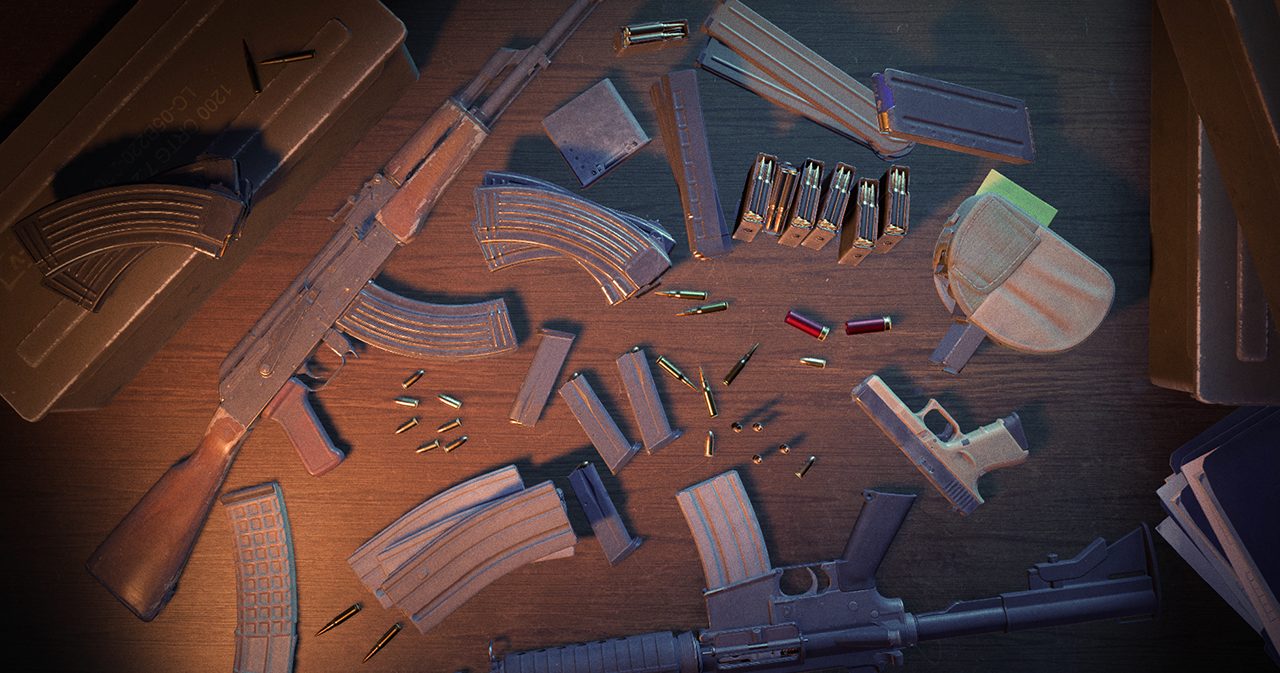
The CS2 community erupted on March 22. Within hours of Valve’s ammunition and magazine remodel patch, Reddit flooded with frustration, Twitter trended with mixed reactions, and casual servers filled with complaints about reduced magazine sizes and reserve ammo cuts. The loudest voices called the CS2 ammo update punishing. Some accused Valve of not understanding their own game. The reflexive response was immediate and familiar: change bad, revert now.
Here is what I think, and I am going to say it plainly: the community is wrong to panic, and Valve is directionally correct. This update does not make Counter-Strike harder for skilled players. It makes skill more visible. And that is exactly what competitive Counter-Strike is supposed to reward.
CS2’s March 2026 Ammo Update: What Actually Changed
Let us start with the concrete details. In the CS2 ammo update, Valve reduced sniper reserve ammunition counts, tightened magazine sizes on several rifle and pistol weapons, adjusted magazine drop animations to reflect the new model counts, and overhauled the PBR cartridge visuals. These are not cosmetic adjustments dressed up as balance. These are deliberate mechanical shifts that change how players deploy ammunition across a round.
The M4A1-S magazine reduction is the most aggressive change in this CS2 balance patch, and it is the one drawing the most fire. Players complain that the reduced magazine forces them to reload more frequently, leaving them exposed. Pistol round reserve ammo cuts mean fewer backup bullets for early-round saves. AWP players are frustrated about missing a shot and suddenly being conscious of ammunition scarcity. Casual players, especially, are frustrated by what they perceive as a nerf to their comfort and firepower.
I get it. I do. If you are accustomed to spraying a magazine into a wall and burning thirty rounds without thinking, the tighter constraints feel punishing. But that reaction fundamentally misunderstands what the update is actually doing.
The strongest version of Counter-Strike is not one where every mistake is forgiven by bottomless ammo pools. It is one where every bullet counts and every decision has visible consequences.
How CS2 Ammo Changes Force Tactical Intentionality
Competitive Counter-Strike 2, at its mechanical core, has always rewarded deliberate engagement. It is not a spray-and-pray game. It is not a game where volume of fire compensates for poor positioning or poor crosshair placement. The best players win rounds because they make better decisions faster: peeking with a purpose, taking engagements they can win with their weapon and economy, moving with information instead of guessing.
What this ammo update does is extend that philosophy of intentionality one layer deeper. A player who peeks with an AWP and misses now pays a genuinely meaningful cost: they are down a sniper bullet. That cost was always supposed to matter in theory, but in practice, swollen reserve ammo counts softened the consequence. Miss a shot on the AWP? No problem. You had eleven more bullets in reserve. The penalty was largely theoretical.
Now, the penalty is real. And that creates tension. Tension is drama. Drama is what separates competitive Counter-Strike from a series of rote mechanical executions. When an AWP player is conscious that every shot carries weight, their decision-making changes. They peek more carefully. They reset more often. They take fewer speculative shots. That is exactly the kind of moment-to-moment decision-making that separates a 1.0+ rating player from a 0.8 rating player.
For rifle players, the same principle applies. The M4A1-S reduction is aggressive, sure. But aggressive pressure on ammunition management is not a bug. It is the feature. It forces CT-side players to think harder about mag-dumps versus disciplined taps. It creates situations where a player has to choose between aggressive utility use and holding reserves. That is richer decision-making, not poorer play.
CS2 Magazine Changes Create New Tactical Opportunities
Here is something the panicked community is not talking about: shorter magazines mean longer, more frequent reload windows. And reload windows are opportunities for the opposing team.
Imagine a mid-round CT defense where an AWPer has just taken a shot and is reloading. That three-second reload is a timing vulnerability. A T-side player with game sense recognizes that window and exploits it. Suddenly, there is a completely new layer of tactical play emerging around reload sequences in CS2 competitive matches. Are you going to swing while they are vulnerable? Are you going to trade into their reload? Are you going to bait out their next shot and punish the reload that follows?
This is not a bug. This is complexity. This is the difference between Counter-Strike as a tactical puzzle and Counter-Strike as a pure mechanical spray contest. The teams that win at the highest level will be the ones that adapt fastest to these new timing windows. Valve just handed competitive teams a completely new dimension of play to master. That is a gift, not a punishment.
CS2 Balance: How Ammo Scarcity Deepens Economy Strategy
Pistol rounds are conventionally parsed as a binary: save or force. You have a certain economy, you make a choice, and the rest follows. This CS2 ammo update fundamentally changes that framework by introducing a third layer: allocation. With fewer backup bullets available, the conversation is no longer just about whether you are saving or forcing. It is about how you deploy a smaller ammo pool most efficiently.
If your whole pistol round is now working with less ammunition, players have to make harder choices about what positions get utility and what positions get economy flexibility. Do you invest all your backup ammo in one aggressive position? Do you spread it thin across the round? Do you adjust your peeks and timing based on ammo availability rather than pure positioning? These are genuinely new questions, and they create deeper strategic differentiation.
The same logic applies to eco rounds and semi-buy situations. Reduced sniper reserves mean teams cannot just brainlessly buy an AWP and rely on fourteen bullets to carry a round. The AWP becomes a tool that explicitly rewards investment in aim rather than a safety net for repeated attempts. For teams with strong snipers, the payoff is massive. For teams that relied on volume, it is a clear recalibration.
Legitimate Concerns About the CS2 Ammo Update
I am not going to sit here and pretend every element of this patch is perfect. Some criticisms deserve serious attention.
The M4A1-S reduction is genuinely aggressive, and it is worth monitoring closely over the next two weeks of competitive CS2 play. If CT-side win rates in semi-pro and professional matches drop disproportionately, if the data shows the change has fundamentally broken CT-side viability, Valve will course-correct. That is fine. That is how balance works. But the fact that a change is aggressive does not make it wrong; it makes it worth testing carefully.
Casual players are also a legitimate audience, and their frustration with feeling punished for loose shooting is understandable. I am not arguing that casual comfort should be completely irrelevant. But here is the thing: Counter-Strike’s competitive integrity cannot be calibrated primarily around casual comfort. If it is, you end up with a game that nobody takes seriously. You end up with a game where every weapon feels identical and every decision is trivial. That is not Counter-Strike. That is a shooter, sure, but it is not the game Valve built and the pro scene has sustained.
The visual elements of this patch are widely praised and completely uncontroversial. The PBR cartridge models are sharper, the magazine drop animations are more detailed, and the overall presentation signals that Valve treats CS2’s mechanical systems as worth polishing and presenting seriously. That is common ground. That is also a signal: Valve is invested in this game as a competitive product.
Monitoring CS2 Competitive Meta After the Ammo Update
BLAST Open Spring 2026 Rotterdam begins March 28, just six days after this patch hit live servers. That event is the first real data point for how pro teams adapt to the new economy landscape. Watch how Fnatic and MOUZ approach pistol rounds. Watch whether Spirit adjusts their utility spending. Watch if AWPers change their peeking patterns.
If misplay rates on the AWP increase at the top level, if we see consistent sniper whiffs creating economy problems, that is a sign the reserve reduction is working exactly as intended. If nothing changes, if teams absorb the nerf and move on, that is also informative: it means the changes were calibration tweaks, not game-breaking pivots.
Community sentiment typically stabilizes two to three weeks after meta-shifting patches as players adapt. This is not the first controversial update, and it will not be the last. The pattern is always the same: initial panic, a week of debate, adaptation, meta evolution, and normalization. In six months, these changes will feel like baseline. That does not mean they are not worth discussing now. It just means the knee-jerk reaction is premature.
Why the CS2 Magazine Update Matters for Competitive Play
This CS2 ammo update is not just about ammunition counts. It is a statement about what Counter-Strike 2 is supposed to be. Valve is saying that they believe the strongest version of this game is one where every bullet carries weight and every decision has visible consequences. They are saying they believe that skill expression increases when resources are finite. They are saying that reloading vulnerabilities and ammunition management are legitimate layers of competitive play.
That is a bold editorial stance, actually. And I agree with it completely.
Counter-Strike has always been a game about consequences. You misposition, you die. You whiff a spray, you die. You make a bad economy call, you enter the next round at a disadvantage. The game has gotten stronger because it does not forgive mistakes. This CS2 magazine update extends that philosophy into the ammunition economy. It says: you mismanage your ammunition, you enter end-of-round with no resources. Your next decision is harder. That consequence cascades.
That is the opposite of punishment. That is refinement.
Should CS2 Competitive Players Adapt or Revolt?
Look, I understand the resistance to change. Counter-Strike 2 communities have good reasons to be skeptical of Valve patches. But I also think the reflexive backlash to this particular CS2 ammo update is overblown. This is not a nerf in disguise. It is a rebalancing that shifts the game toward higher skill expression and deeper tactical play. It makes Counter-Strike harder for players who rely on spray control and large reserve pools. It makes Counter-Strike more interesting for players who think about positioning, timing, and resource management.
The strongest competitive players will adapt fastest. The meta will shift. Teams will optimize around these constraints. And in a few weeks, we will have a clearer picture of whether Valve nailed the calibration or whether adjustments are needed.
But that process does not happen if the community spends three weeks arguing that the patch should be reverted sight unseen. It happens if we actually sit with these changes, watch how the pro scene responds, and let the data speak.
The community will adapt, the meta will evolve, and in six months, these changes will feel like baseline.
So here is my question for you: have you actually tested the CS2 ammo changes deeply enough to have a confident opinion, or are you reacting to the initial frustration? And if you are adapting your play to these new constraints, what tactical layers are starting to emerge that you did not expect? Let us hear it in the comments. That is where the real conversation about the CS2 competitive meta happens.