
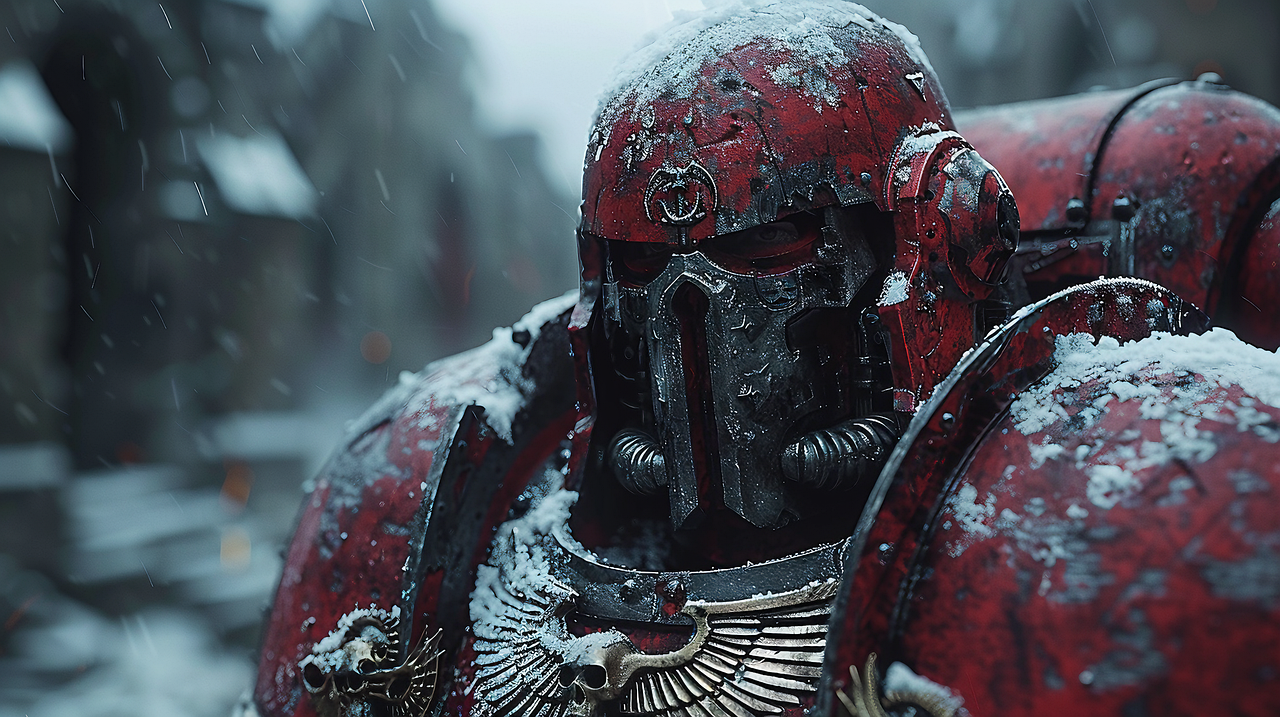
After eight years of exile, the Emperor’s finest march back to the RTS battlefield. King Art Games promises a return to massive-scale warfare, four full campaigns, and the franchise’s first playable Primarch in a 70+ mission love letter to classic Dawn of War.
The blood-soaked battlefields of Kronus are about to witness war on a scale not seen since 2009. King Art Games pulled back the curtain at Gamescom Opening Night Live to reveal Warhammer 40,000: Dawn of War 4 , a real-time strategy game that explicitly rejects the failed MOBA-hybrid experiment of its predecessor and returns the beloved franchise to its foundational roots of base-building, mass warfare, and the kind of spectacular grimdark carnage that made the original games legendary.
This is not just another sequel announcement. This is a resurrection, a course correction, and if King Art delivers on what they showed, potentially the redemption of one of the most storied RTS franchises in gaming history.
The Return of the Space Marines
For those who remember the glory days of 2004’s Dawn of War and 2006’s Dark Crusade, the setup will feel like coming home after a long, heretical detour. Planet Kronus , that contested rock where four factions once battled for supremacy, has been left to fester for 200 years . The Blood Ravens chapter, devastated by the events of Dawn of War II and III, returns to rebuild. But Kronus is far from empty.
Orks have infested the planet like a green tide of violence and scrap metal. Necrons stir in their tomb complexes deep underground, awakening from their millions-year slumber. An invasion fleet looms in orbit. And caught in the middle of this apocalyptic convergence are the tech-priests of the Adeptus Mechanicus, making their franchise debut.
The narrative is co-written by John French , a Black Library author best known for the Ahriman series, which immediately signals that King Art understands this universe demands more than generic military sci-fi dialogue. Creative Director Jan Theysen laid out the studio’s philosophy clearly in pre-release interviews.
“We are known for making narrative-driven games, and the campaign for Iron Harvest was very well received. So for us, this was super clear: campaigns will be one of the big pillars for the game.”
That commitment translates into 70+ epic campaign missions spread across four full singleplayer and co-op campaigns , one for each faction at launch. This is not a token story mode bolted onto multiplayer. This is four distinct narrative experiences, each playable solo or with a friend, each offering a different perspective on the war for Kronus.
The Blood Ravens Ride Again (With a Very Special Guest)
Fans of Dawn of War II will recognize two familiar faces immediately. Scout Sergeant Cyrus , voiced once again by the legendary Steve Blum , returns alongside Jonah . But the real headline steals the show with the kind of audacity that makes Warhammer 40K fans lose their minds.
Lion El’Jonson , Primarch of the Dark Angels and one of the Emperor’s gene-forged demigod sons, appears in Dawn of War 4 as a playable character. Read that again. The first playable Primarch in any Warhammer 40,000 video game ever.
Theysen explained the decision with the kind of straightforward logic that’s hard to argue with.
“If you get the opportunity to have a Primarch in your game, for the first time in any video game, you take that opportunity.”
The Lion’s role is described as “small but pivotal,” which makes sense given that Primarchs are walking weapons of apocalyptic power. You can’t just drop one into every mission without breaking the game’s balance. But the fact that King Art secured the license to use him and built gameplay systems to make commanding a Primarch feel appropriately earth-shattering speaks volumes about their ambition.
The Space Marine roster also includes the Dark Angels as a sub-faction, giving players tactical variety within the Imperium’s finest. Expect heavy bolter fire, drop pod deployments, and the kind of righteous fury that only gene-enhanced super-soldiers in power armor can deliver.
Xenos Threats and Heretek Allies
The other three factions each bring distinct gameplay identities and thematic flavors to the battlefield.
Orks return with their signature blend of mass shooting, brutal melee combat, and the Waaagh! energy meter that fuels their best abilities when the greenskins reach critical mass. Warboss Gorgutz , a fan-favorite character from previous games, makes his return. The campaign centers on two rival Warbosses battling for dominance on Kronus, which means Ork players get to experience the faction’s internal power struggles alongside the external wars. If you’ve ever wanted to krump some gits while simultaneously krumping the humies, this is your chance.
Necrons finally get their day in the tombworld sun after years of broken promises. They were teased and hyped for Dawn of War III, only to never appear when that game imploded. Their inclusion here is what Theysen called “a nice touch for the community,” which is a masterclass in understatement. Necrons bring reanimation abilities and “incredible staying power” to the table, meaning your skeletal legions will keep getting back up after being blown apart. Expect slow, inexorable advances and the kind of attrition warfare that grinds enemy armies to dust.
Adeptus Mechanicus represents completely new territory for the franchise. The tech-priests of Mars have never been playable in a Dawn of War game before, and King Art has built them around the Noospheric Network system . This mechanic strengthens nearby units and provides scanning capabilities through the fog of war, creating a faction that rewards careful positioning and synergistic army composition. Think information warfare meets cybernetic death cultists armed with plasma weaponry and religious fervor directed at machines instead of the Emperor.
Base Building and Mass Battles Return
Here’s where Dawn of War 4 makes its clearest break from the mistakes of its immediate predecessor. Dawn of War III tried to chase the MOBA trend with hero-focused gameplay, smaller unit counts, and mechanics that alienated the core fanbase. It died faster than almost any other triple-A title in recent memory, a spectacular failure that left the franchise in limbo for eight years.
King Art watched that disaster unfold and drew the correct conclusions. Theysen was explicit about their design philosophy.
“We want to go for Dawn of War 1 and how people felt about that definitely also informed a lot of the choices that we made.”
That means real-time strategy with mass-battle, base-building gameplay . Resource gathering. Construction queues. Tech trees. Army composition that matters. Over 110 units and buildings across all four factions, many of them upgradeable. The developers promise a faster pace than the original games, claiming “you can get a full base up and running in minutes,” which should keep matches dynamic without sacrificing the strategic depth that made Dawn of War 1 and its expansions so replayable.
The Army Painter tool returns, letting players customize their faction’s color schemes and heraldry. For Warhammer fans who spent years hunched over miniatures with brushes and paint, this is non-negotiable. Your army should look like your army. King Art understands this.
Even better, the game includes an in-game editor for player content creation , which could extend the game’s lifespan dramatically if the community embraces it. Custom scenarios, challenge maps, and experimental modes could flow from the playerbase for years if the tools are robust enough.
The Combat Director System: A Thousand Ways to Die
Real-time strategy games live or die on how satisfying combat feels, and King Art is betting big on what they call the Combat Director System . This evolved form of Dawn of War 1’s sync-kill animations generates over 1,000 animation permutations compared to the dozens in the original games.
Animation Director Thomas Derksen made an audacious claim about the system.
“I don’t think any RTS has really done anything like this in the past.”
The goal is simple but technically complex: every action on the battlefield should have a counterpart response. When a Space Marine chainsword rips into an Ork, the Ork doesn’t just play a generic death animation. The system dynamically generates contextual responses based on weapon type, unit orientation, armor state, and probably a dozen other variables.
If this works as advertised, battles in Dawn of War 4 will feel genuinely cinematic without sacrificing the clarity and readability that competitive RTS demands. You should be able to zoom in and watch your units tear through enemy formations with brutal, grimdark spectacle, then zoom back out and maintain perfect tactical control. That’s the promise, at least. We’ll see if King Art can deliver when the game launches.
Why This Matters for the RTS Genre
Real-time strategy has been in a slow decline for over a decade. MOBAs cannibalized the competitive playerbase. Grand strategy games like Crusader Kings and Stellaris captured the hardcore depth-seekers. The casual audience moved to mobile. Traditional base-building RTS games became a niche within a niche, sustained mostly by esports ecosystems around StarCraft II and Age of Empires remasters.
Dawn of War 4 arrives into this landscape with the confidence of a franchise that knows exactly what it wants to be. It’s not chasing trends. It’s not trying to be a MOBA or a hero brawler or an auto-battler. It’s an old-school, mass-battle, base-building RTS with modern production values, four full campaigns, and enough modes to satisfy both singleplayer enthusiasts and competitive multiplayer grinders.
The mode list is comprehensive. Last Stand survival mode for co-op players who want to hold the line against infinite waves. Skirmish for quick battles against AI. Crusades for meta-campaign structure. Competitive multiplayer in 1v1, 2v2, and 3v3 configurations for ranked play. This is a game designed to give players reasons to return week after week, match after match.
PC Gamer’s hands-on preview captured the sentiment that many longtime fans are feeling.
“It might just be the true sequel to the original game that we’ve been waiting for.”
That’s not hyperbole born from a flashy demo. That’s cautious optimism from people who remember what made Dawn of War great and can see those design principles returning after years in exile.
King Art Games: The Dark Horse Developer
Before anyone starts worrying about an unknown studio handling a beloved franchise, let’s address the elephant in the room. This is the first Dawn of War game not developed by Relic Entertainment , the studio that created the original trilogy. That’s a legitimate concern.
But King Art Games is hardly an inexperienced upstart. Founded in 2000 and based in Bremen, Germany , the studio employs around 110 people and has built a solid reputation for narrative-driven strategy games.
Their most relevant credential is Iron Harvest from 2020, a dieselpunk alternate-history RTS set in a 1920+ timeline where mechs stalk the battlefields of a war-torn Europe. The game won Best German Game, Best Game Design, and Best Sound at the Deutscher Entwicklerpreis 2020. More importantly, its campaign was widely praised for strong storytelling and mission variety —exactly the strengths Dawn of War 4 needs to succeed.
King Art also developed The Book of Unwritten Tales series and Battle Worlds: Kronos, both well-regarded in their respective genres. This is a studio that understands strategy games, understands narrative design, and has spent almost four years working on Dawn of War 4 before the August 2025 announcement.
They’re not trying to reinvent the wheel. They’re trying to build the best possible version of a wheel design that already worked. That’s the smart play.
The Path to 2026
Dawn of War 4 is scheduled to release sometime in 2026 exclusively on PC via Steam . Publisher Deep Silver is handling distribution, which means the game should have solid marketing support and a stable release infrastructure.
The question now is whether King Art can maintain momentum through what will likely be at least a year of development, beta testing, community feedback cycles, and polish. The Warhammer 40K fanbase is passionate, opinionated, and extremely online. They will dissect every trailer frame, every developer diary, every screenshot for signs of heresy against the source material or the legacy of the franchise.
But if the foundation is solid and the vision is clear, those same fans will become the game’s most powerful evangelists. Dawn of War 1 and its expansions built a community that has kept those games alive for over 15 years through mods, multiplayer communities, and sheer love for the setting. Dawn of War 4 has the potential to reignite that passion on a modern platform with modern features.
The RTS genre needs this. The Warhammer 40K video game library needs this. And the fans who have waited eight years for a proper Dawn of War game deserve this.
Prepare for War
In the grim darkness of the far future, there is only war. And in 2026, that war returns to Kronus with orbital bombardments, Waaagh! energies, reanimation protocols, and Noospheric Networks all converging in what could be the RTS resurrection we’ve been waiting for.
King Art Games has made the right promises. They’ve assembled the right talent. They’ve chosen the right design philosophy. Now comes the hardest part: execution.
The Blood Ravens are ready. The Orks are gathering. The Necrons are awakening. The Adeptus Mechanicus calculates the optimal path to victory. And somewhere in the warp, the chaos gods are watching with interest.
For the Emperor. For the Waaagh. For the Omnissiah. For the cold eternity of the Necron dynasties.
Dawn of War 4 marches to battle in 2026. May your bolters never jam and your supply lines never falter.
Warhammer 40,000: Dawn of War 4 is in development by King Art Games and published by Deep Silver. It is scheduled for release on PC via Steam in 2026.