

A Perfect Storm Is Brewing
On November 12, 2025, Valve did something it rarely does: it made a big, loud announcement. Three new pieces of hardware — the Steam Machine (a living room console), the Steam Frame (a standalone VR headset), and a redesigned Steam Controller — were revealed for a first-half 2026 launch window. The gaming world took notice.
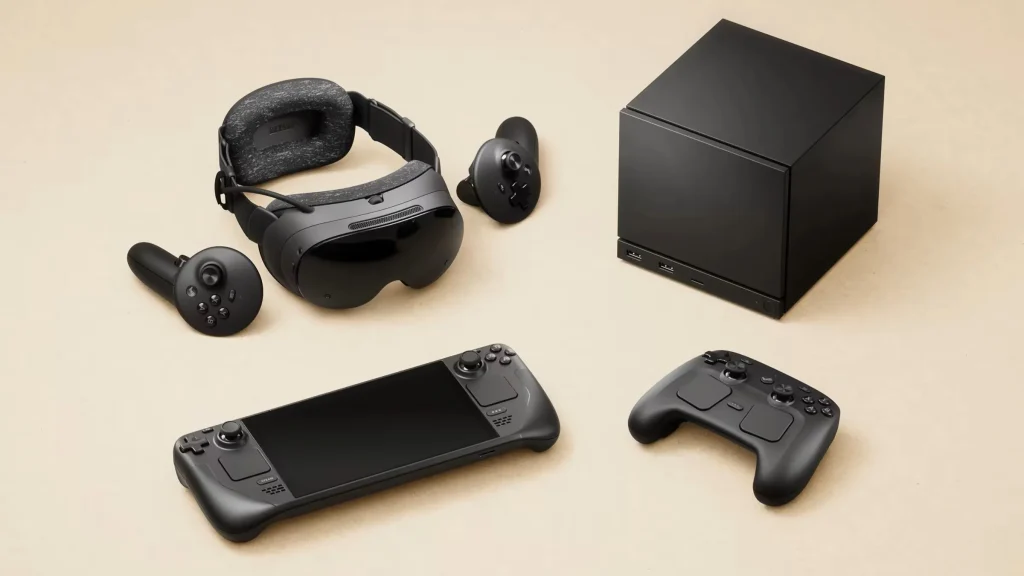
But it wasn’t just the hardware that had people talking. Within hours, the conversation shifted to a single, electric question: What game is going to sell this thing?
For a growing number of insiders, dataminers, and analysts, the answer is the one that’s been whispered in gaming circles for over twenty years: Half-Life 3 .
The Hardware: What Valve Is Actually Shipping
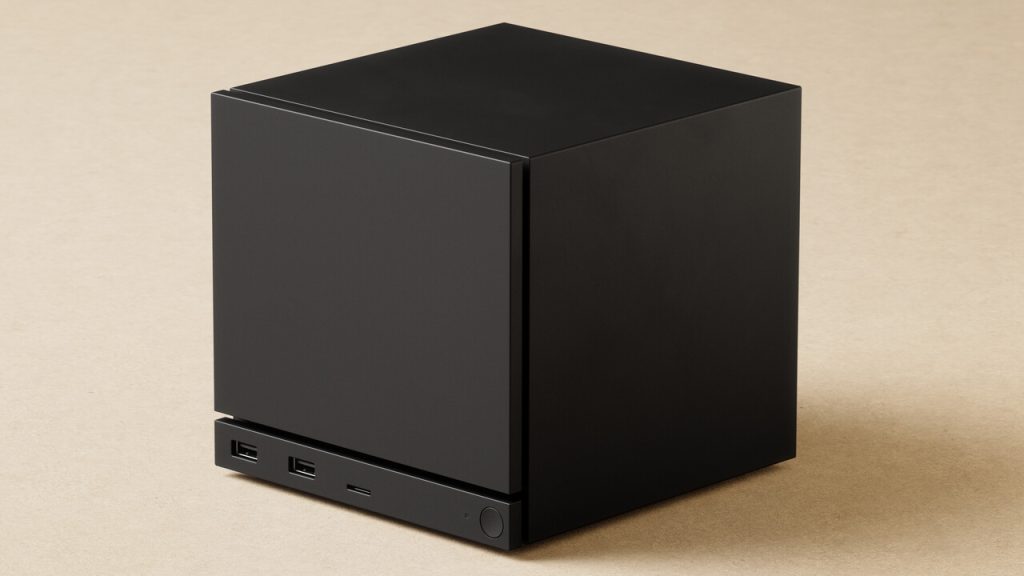
Before we dive into the theory, it helps to understand just how serious Valve is about this hardware push. The Steam Machine isn’t a rehash of the ill-fated 2015 experiment. This is a purpose-built console running SteamOS on custom AMD silicon.
Steam Machine Specs at a Glance
- CPU: Custom AMD Zen 4, 6 cores / 12 threads, boosting up to 4.8 GHz
- GPU: Custom AMD RDNA 3, 28 compute units at 2.45 GHz sustained, with 8 GB GDDR6
- RAM: 16 GB DDR5 (via upgradeable SODIMM modules)
- Target: 4K/60fps with FSR and ray tracing enabled
- Size: A compact 156mm cube — roughly the size of a large Rubik’s cube
- Power: Approximately 6x more powerful than the Steam Deck
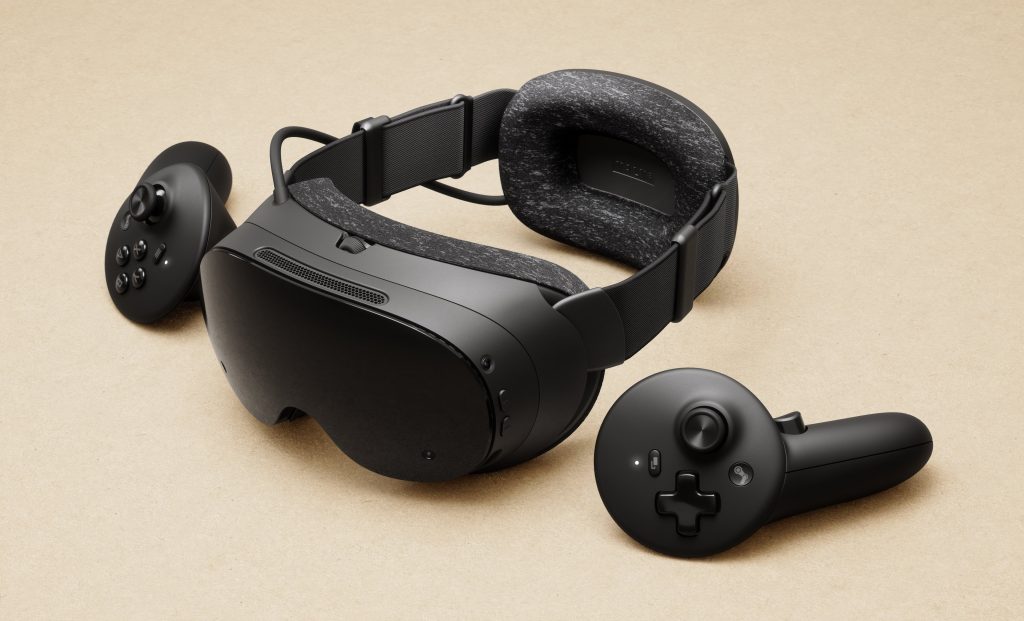
The Steam Frame , meanwhile, is Valve’s answer to the Meta Quest — a standalone VR headset powered by a Snapdragon 8 Gen 3, with 2160×2160 per-eye resolution, 144Hz refresh rate, and the same capacitive finger-tracking controllers that made the Index a favorite among VR enthusiasts. It also doubles as a PCVR headset over cable or wireless.
Pricing hasn’t been finalized — a global memory component shortage has driven RAM prices up 200–500% since October 2025, forcing Valve to delay both release dates and pricing announcements. Community estimates put the Steam Machine at $800–$1,200 and the Steam Frame at $500–$600, though Valve has positioned the console closer to “entry-level PC prices.”
This is not a hobby project. This is Valve going all-in. And history tells us that when Valve goes all-in on hardware, a flagship game is never far behind.
The Precedent: How Half-Life: Alyx Changed Everything
To understand why the Half-Life 3 launch title theory has such gravity, you have to look at what happened in late 2019.
On November 21, 2019, Valve announced Half-Life: Alyx — the first new Half-Life game in 13 years, built exclusively for VR. The timing was no accident. Valve had launched its high-end Valve Index VR headset just five months earlier, and it needed a reason for people to buy a $999 kit.
Half-Life: Alyx was that reason.
The Numbers Tell the Story
- 103,000 Valve Index units sold in Q4 2019 alone — 72% of the headset’s entire annual sales, all in the quarter after Alyx was announced
- The Index sold out in all 31 regions by mid-January 2020, with restocked waves selling out in under 30 minutes
- Alyx itself moved 860,000 copies in its launch month and crossed 2 million sales within a year
- In April 2020, nearly 1 million new VR headsets connected to Steam — nearly triple the previous record for monthly VR adoption
- The Valve Index jumped to 11.94% market share on Steam, making Valve the third-largest VR headset vendor less than a year after launch
Valve proved something that many doubted: a single game, from the right franchise, could move hardware at scale. Every free copy of Alyx bundled with an Index wasn’t a giveaway — it was an investment that paid for itself many times over.
This wasn’t even the first time Valve pulled this move. Half-Life 2 in 2004 required Steam installation, effectively forcing millions of players onto the platform that would go on to dominate PC gaming distribution with over 70% market share. Valve literally invented the Steam Hardware Survey over 20 years ago specifically to determine what specs to target for Half-Life 2.
The pattern is unmistakable: when Valve launches new platforms, Half-Life leads the charge.
The Evidence: What We Actually Know About “HLX”
Here’s where things get interesting. Unlike previous cycles of Half-Life 3 hype — which were largely fueled by wishful thinking and Gabe Newell jokes — the current wave of speculation is backed by a convergence of technical evidence and insider reporting that’s unlike anything we’ve seen before.
The Datamined Trail
Since 2021, dataminers have been finding references to a project codenamed “HLX” buried in update files for Valve’s active games — Dota 2, Counter-Strike 2, and most recently, Deadlock. The latest discovery came on February 5, 2026 , when prominent dataminer GabeFollower found fresh HLX references in a January 2026 Deadlock update.
This is significant. Abandoned projects don’t keep showing up in new code updates five years later. The consistency and recency of these references point to an active, ongoing development effort .
Technical Indicators
Beyond the codename, dataminers have uncovered specific technical details that paint a picture of a game in its final stages of development :
- FSR 3 Support: AMD’s FidelityFX Super Resolution 3 has been found in HLX files. As Valve News Network’s Tyler McVicker noted: “You don’t use FSR until you’re nearly done with a game.”
- Advanced NPC AI: Mood-based systems that react to sound, sight, and smell — suggesting a major leap beyond previous Source engine capabilities
- Upgraded Physics: Expanded fluid simulation, flammability mechanics, and destructible environments
The Insider Reports
Multiple credible industry sources have independently converged on the same story:
Mike Straw , Senior Editor at Insider Gaming, has been the most vocal: “Spring 2026 is the target window for the Steam Machine, Frame, Controller, and Half-Life 3. Sources are adamant this is a game that will be a launch title with the Steam Machine. At the end of the day, the game is real.”
Straw acknowledges that “every date previously provided to journalists has passed” — a nod to the graveyard of failed Half-Life 3 predictions — but maintains his current sources are “reliable industry contacts” who’ve been accurate on other major titles.
Tom Henderson , also of Insider Gaming, has corroborated with separate sources pointing to a March 2026 window. Tyler McVicker has called a 2026 announcement “likely” based purely on the technical evidence. And GabeFollower reports that the game entered internal playtesting in late 2024 — which, if true, puts a Spring 2026 launch well within a plausible 16-month polish-and-ship timeline.
Why This Time Actually Feels Different
“Half-Life 3 confirmed” has been a punchline for so long that it’s easy to dismiss any new rumor on reflex. But there are real, structural reasons why this cycle of speculation carries more weight than anything that came before it.
1. For the First Time, There’s Hardware Context
Previous Half-Life 3 rumors existed in a vacuum — there was no concrete reason for Valve to release it at any given moment. Now there is. The Steam Machine is a confirmed product with a confirmed launch window, and Valve has a demonstrated, repeated pattern of using Half-Life to sell new platforms. The question isn’t whether Valve would do this — they’ve done it three times already.
2. Multiple Independent Sources Are Converging
Past rumors typically came from a single source or a single datamine. This time, independent journalists (Straw, Henderson), technical analysts (McVicker), and dataminers (GabeFollower) are all arriving at the same conclusion from different angles. That kind of convergence is rare in gaming leaks.
3. The Technical Evidence Suggests Late-Stage Development
FSR 3 integration is not something you do during prototyping. It’s optimization work — the kind you do when a game is nearly finished and you’re preparing it for specific hardware targets. Like, say, a console launching in Spring 2026.
4. Valve Needs a Reason to Exist in the Living Room
The Steam Machine is entering a brutally competitive market. The PlayStation 5 and Xbox Series X have established install bases. The Steam Deck already serves the portable market. A $800+ console running Linux needs a must-have reason to exist — and nothing in gaming would generate more attention than the release of Half-Life 3.
With over 25,000 Steam Deck Verified titles automatically qualifying for the Steam Machine, the library is there. But the event — the thing that makes people line up, pre-order, and post about it on every social media platform — that requires something bigger. Half-Life 3 is the biggest card Valve could possibly play.
The Case for Skepticism
Intellectual honesty demands we also lay out the counterarguments. And they’re real.
Valve has disappointed before. Half-Life 2: Episode Three was effectively cancelled after years of promises. Left 4 Dead 3 reportedly reached a playable state before being shelved. Valve’s famously flat corporate structure means any employee can walk away from any project at any time. Games at Valve are never “guaranteed” until they’re on the store page.
No visual evidence exists. Despite claims of late-stage development, not a single screenshot, gameplay clip, or piece of marketing material has leaked. For a game allegedly months from release, that’s either remarkable operational security or a sign that the timeline is more aspirational than concrete.
Anonymous sources can be wrong. Straw himself admits that “every date previously provided to journalists has passed.” It’s possible that multiple sources are all referencing the same incorrect internal information, creating a false sense of convergence.
The hardware delay complicates everything. The RAM shortage that pushed the Steam Machine into “first half of 2026” could cascade further. If the hardware slips to late 2026 or beyond, the game’s release calculus changes entirely.
What Valve’s Silence Tells Us
Perhaps the most telling detail in all of this is what Valve hasn’t said. The company has made zero official statements about Half-Life 3. It hasn’t confirmed it. It hasn’t denied it. It hasn’t even done its usual playful deflection.
That silence is, in its own way, revealing. Valve knows these rumors exist. If Half-Life 3 weren’t real — if there were nothing to protect — a simple “we have no plans for a new Half-Life game” would end the speculation overnight and prevent the kind of fan disappointment that companies generally try to avoid.
Instead: silence. The kind of silence a company maintains when it has something to protect.
The Bigger Picture: Valve Becoming Nintendo
Gabe Newell has spoken publicly about wanting Valve to become “more like Nintendo” — a company that develops games in tandem with hardware, controlling the full stack from silicon to software to storefront. The Steam Deck was the first real step in that direction. The Steam Machine, Steam Frame, and Steam Controller represent the full realization of that vision.
And what does Nintendo do better than anyone? It launches hardware with flagship first-party software. The Switch had Breath of the Wild . The Wii had Wii Sports . The N64 had Super Mario 64 . Every successful Nintendo console launch is defined by a single game that demonstrates why the hardware matters.
If Valve truly wants to be the Nintendo of PC gaming, Half-Life 3 as a Steam Machine launch title isn’t just a nice-to-have — it’s the strategic imperative that makes the entire hardware vision coherent.
Where Things Stand Right Now
As of February 2026, here’s what we know for certain versus what remains speculation:
Confirmed
- The Steam Machine, Steam Frame, and Steam Controller are real products shipping in the first half of 2026
- “HLX” references have been consistently datamined from Valve games since 2021, with the most recent appearing in January 2026
- Valve has a proven track record of using Half-Life titles to drive hardware adoption
- Hardware pricing and exact release dates are delayed due to a global memory shortage
Highly Plausible
- A new Half-Life game is in active, late-stage development at Valve
- Spring 2026 is a target window, though subject to change
- Valve intends to use this game to drive Steam Machine adoption
Unconfirmed
- Whether the game will definitely launch alongside the hardware
- Any specific gameplay details, story elements, or features
- Whether the game will be exclusive to Steam Machine hardware or available across all PC/Steam Deck
- Final pricing for any of the hardware
The Bottom Line
Here’s the thing about the “Half-Life 3 as launch title” theory: it doesn’t require you to believe in leaks or trust anonymous sources. It just requires you to believe that Valve is a rational company that learns from its own history.
Valve used Half-Life 2 to launch Steam. It used Half-Life: Alyx to sell the Index. It has new hardware arriving this year that needs a reason to exist in people’s living rooms. It has a game codenamed HLX that keeps showing up in its own code. And it has said nothing to dispel any of the mounting speculation.
Could this all be coincidence? Could Valve launch the Steam Machine with nothing but its existing library and a prayer? Technically, yes. But as one writer at The Gamer put it: “If the Steam Machine doesn’t launch with a new Half-Life, I’ll eat my hat.”
After twenty years, the meme might finally be becoming reality — not because of hope, but because of hardware.
This article will be updated as new information becomes available. Last updated: February 12, 2026.