
Estimated reading time: 8 minutes
The “Guns, Guides, and Games” update, released March 18, 2026, permanently discards unspent rounds on reload — a change that rewrites muscle memory built across nearly three decades of Counter-Strike.
Seattle, March 30, 2026 — For 27 years, reloading your magazine in Counter-Strike meant a quick, cost-free housekeeping exercise: dump the current mag, top up, and carry on with every leftover bullet safely tucked into your reserve pool. As of March 18, 2026 , that era is dead. Valve’s “Guns, Guides, and Games” patch introduced a single rule change that has fractured the CS2 community more cleanly than a knife through Kevlar — when you reload, the remaining rounds in your magazine are gone. Permanently. No refund. No negotiation.
The Old Way vs. The New Reality
To understand why this has the forums on fire, you need to appreciate just how deeply the old system was baked into Counter-Strike’s identity. Since 1998 , the reload was a free action with no downside beyond the animation window. Veteran players developed “safety reloads” as second nature — peek a corner, trade two shots, back off, reload. Your six unspent bullets returned to the pool. Clean. Efficient. Zero cost.
That logic no longer applies. Under the new system, if your AK-47 has 11 bullets left in the magazine and you hit R , those 11 rounds evaporate. Your new magazine starts fresh, but the game has essentially taxed you for being impatient or cautious — depending on your perspective.
Valve’s own explanation was brief and unambiguous:
“We think the decision to reload should have higher stakes.”
Three seconds of design philosophy, a lifetime of consequences. It is worth noting the change only applies to magazine-fed weapons . Shotguns using shell-fed mechanics operate differently, which makes sense — you cannot “discard” shells that load individually.
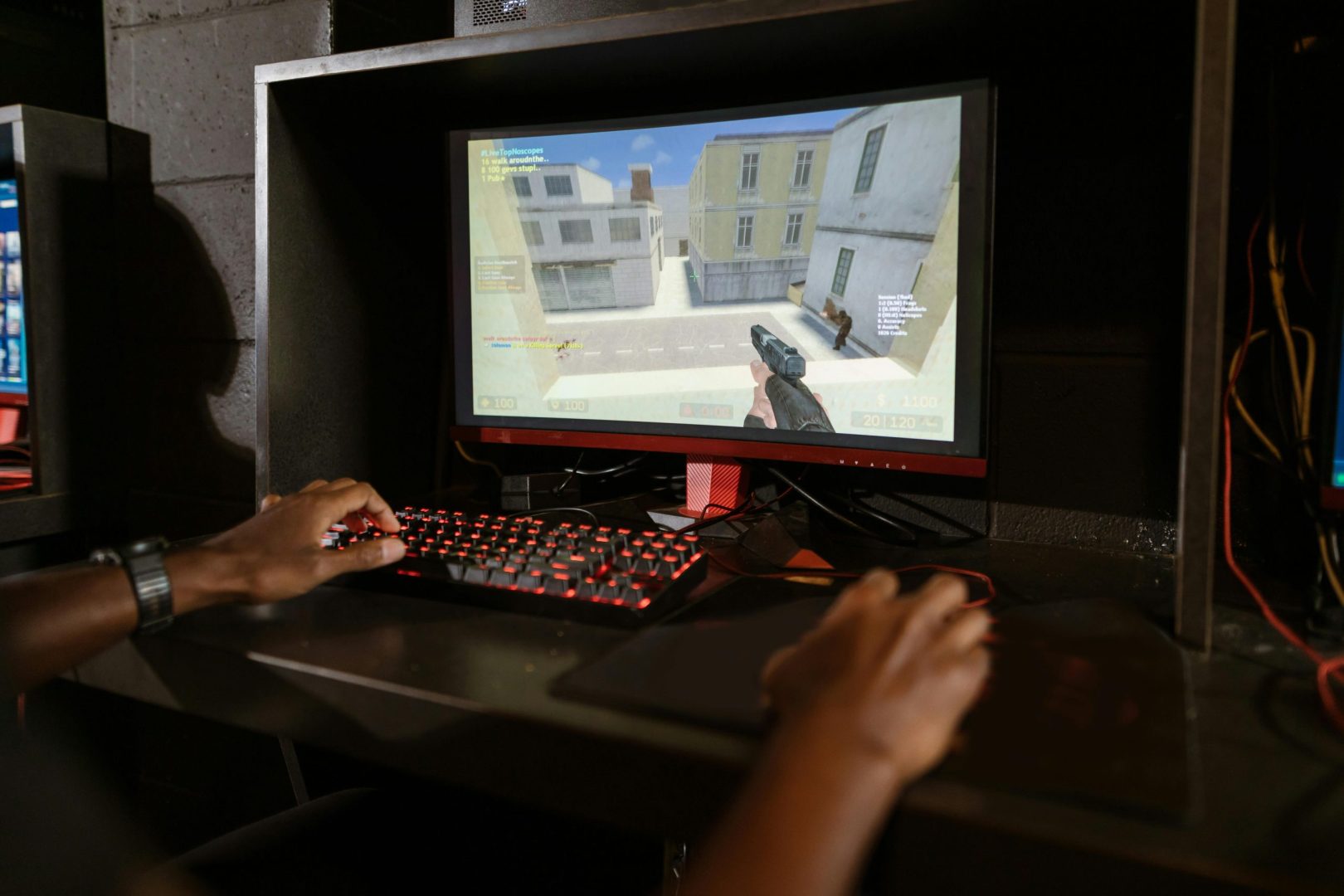
The HUD has been updated to reflect this new economy. Reserve ammo now displays as a number of spare magazines rather than a raw bullet count. A new fill-level indicator on the current magazine gives you a visual read on how much you stand to lose before you pull that trigger. The UI is telling you something the old system never needed to: think before you reload.
What the Numbers Actually Mean
Valve did not simply change the mechanic and call it a day. The update reshuffled ammo counts across nearly the entire weapon roster, and the results are striking. Of the weapons affected, 16 received reductions, 7 were buffed, and 12 stayed unchanged .
The Big Losers
- AWP: Total ammo dropped from approximately 35 shots to just 15 (2 spare magazines). This is a weapon that already costs $4,750 and demands a one-shot commitment on every pull. Now it is also on a strict ration.
- SSG 08 (Scout): The heaviest cut in the patch — down from 100 shots to 30. That is a 70% reduction , the largest absolute loss of any weapon.
- Glock-18: Down 43%, from 140 rounds to 80. The default CT spawn pistol on T-side now has real teeth — but fewer of them.
- Five-SeveN: Lost roughly 50% of reserve ammo . A weapon beloved for its armor penetration on pistol rounds just became considerably more expensive to spray with.
- Dual Berettas: Minus 60 bullets. The meme guns got meme’d.
The Winners
- Galil AR: The biggest buff in the update — +50 bullets . This is no accident. The Galil now holds more total ammo than the AK-47, which carries 3 spare magazines. Valve appears to be deliberately nudging players toward the budget rifle on force-buy rounds.
- M4A4: Up 30 bullets, now running 4 spare magazines — the most generous allocation in the CT rifle category.
- M4A1-S: A slight buff bringing it to 3 spare mags.
- FAMAS, P250, CZ75-A: Modest gains that make the budget tier feel a little less punishing.
The broader picture: most weapons now carry 2 spare magazines . Eleven weapons sit at 3 spare mags. Only 4 weapons reach 4 spare mags. The game’s economy of force has been deliberately tightened, and the message is clear — you are expected to make your shots count, not paper over missed ones with backup ammunition.
Pro Reactions: From Resigned to Furious
The professional community’s response landed somewhere between reluctant acceptance and outright contempt, depending on who you asked. The AWP players, predictably, took it hardest.
m0NESY , the G2/Falcons AWPer widely regarded as the best in the world right now, did not mince words:
“Another AWP nerf. Just remove it from the game already.”
Retired AWP legend kennyS brought the kind of dry self-awareness that makes him one of the most watchable voices in the scene:
“I gotta stop reloading my AWP after shooting once, I also gotta stop whiffing.”
Analyst and historian Thorin was characteristically surgical in his disapproval, firing off two takes that will likely age either very well or very badly:
“Moronic ammo reload change. Way to break what didn’t need fixing.”
“Can Valve make it more obvious that their entire dev staff are a bunch of noobs/pisslow players who rage every time an AWPer kills them?”
On the other side of the divide, analyst Mauisnake offered a defense grounded in tactical reality rather than emotion:
“I like the change because a lot of great strats are stopped before they’re even started because some outside yard CT will just spam with literally zero consequence.”
And a Team Spirit analyst offered perhaps the most grounding take of all, noting that “it’s quite rare for pro players to unload all ammo during a single round” — suggesting the real-world impact on top-tier play may be more contained than the discourse implies. The players most affected will not be those at ESL Premier. They will be you, at 2 a.m., reflexively hitting R after every single engagement.
Reddit confirmed this. A top post about the change cleared 3,500 upvotes within hours . The top comment: “As a chronic reloader I’m terrified.”
What This Changes Competitively
Let us be precise about what this patch actually breaks and what it potentially fixes, because the two are not the same conversation.
AWP Spam Through Smokes: Effectively Eliminated
With only 15 total shots on an AWP, blind-firing through smokes on the hope of a lucky hit is now a potentially match-losing luxury. Each missed shot through a smoke is not just a bullet down — it is a fraction of a two-magazine total. The AWP’s role as a dominant eco-punishment tool remains, but its use as a high-volume spam device is over.
Pistol Round Economy: Genuinely Disrupted
The Glock at -43% , the Five-SeveN at -50% , and the Dual Berettas at -60 bullets reshape both sides of the opening round. T-side pistol aggression through smokes becomes riskier. CT-side Five-SeveN holders need to consider whether that peek was worth the rounds it cost them. These are not theoretical changes — they will show up in win rates within the first week of IEM Rio.
The Galil Meta Shift
This one deserves its own spotlight. The Galil AR now has more total ammo than the AK-47 . For a weapon that costs roughly half the price, that is a serious value proposition on force buys. Expect Galil pick rates to climb significantly once teams have time to adjust their buying strategies. The anti-eco potential of a Galil with generous reserves changes how CTs approach those rounds entirely.
Discipline Over Volume
The systemic shift the patch creates is this: the game now rewards disciplined, precise aimers and punishes spray-and-reset playstyles at every level of play. If you clear a corner with a controlled two-tap and move on, the new system barely affects you. If you spray 20 rounds into a wall, panic-reload, and then have nothing left for the subsequent fight — that is a you problem now, and Valve has decided the game should say so explicitly.
Competitive Calendar: When Does This Matter Most?
BLAST Open Spring 2026 , which was ongoing at the time of the update’s release, made the sensible call to continue on the old patch. No tournament mid-event rewrites its rulebook for a mechanical overhaul of this magnitude. That gives pro teams a finite window of reprieve.
The first major event to run on the new patch will be IEM Rio 2026 , scheduled for April 13–19, 2026 . That gives teams approximately three weeks to rebuild muscle memory, rethink AWP rotations, and figure out whether the Galil bump is a tournament-viable discovery or a pub-stomp quirk. Three weeks is not a lot of time when the change touches nearly every weapon in the game.
Inferno Got a Facelift Too
Lost slightly in the ammunition firestorm, Inferno received a round of meaningful structural tweaks. Entry to Graveyard has been blocked. The wall above Pit is raised. The Balcony has been extended to replace the previous overhang.
The stated goal is making A-site retakes more viable for CTs — a complaint with legitimate competitive history behind it. Whether these changes hold up under pro-level stress testing will become clear at IEM Rio, but on paper, they address real choke points that have made A-site retakes feel like a tax on losing the initial contact.
In-Game Guides: A Tool for the Next Generation
The update’s third pillar, less divisive but genuinely useful, introduces limited tactical node overlays in Competitive and Retakes modes. Think of them as guided tour markers — available during the first 5 rounds of each half, capped at 30 nodes per use. Starter guides have been added for every Active Duty map.
This is clearly aimed at newer players, and there is nothing wrong with that. The barrier to entry in CS2 has always been steep, and anything that flattens the learning curve for smoke lineups and common positioning without handing experienced players a crutch is a net positive. Veterans will switch it off after five seconds. Newcomers might actually learn something before they get smoked off the B site for the seventeenth time.
The Dead Hand Collection: Skins and Five Years of Missing Gloves
Separate from the gameplay update but released just days earlier on March 12, 2026 , the Dead Hand Collection dropped 17 community-designed weapon skins alongside 22 new glove finishes — the first new CS2 gloves since the Broken Fang update in December 2020 . That is a five-year gap. The community had not exactly been quiet about it.
The collection arrives through the Sealed Dead Hand Terminal , CS2’s second Sealed Terminal container. Unlike traditional cases, the Sealed Terminal system shows you what’s on offer and allows re-rolling — a visible economy rather than a pure RNG slot machine. Skins are also available in the weekly drop pool, making lower-tier items accessible without spending.
Flagship items include the AWP Queen’s Gambit and the AK-47 Crane Flight at Classified tier. All 17 skins carry StatTrak versions. Given the AWP just took a significant gameplay nerf, the timing of a prestige AWP skin feels either perfectly calibrated or deeply ironic, depending on how you feel about Valve’s sense of humor.
The Bottom Line
Valve just changed something that has been a constant since the Clinton administration. Whether that change is brilliant design or misguided tampering depends entirely on what you believe Counter-Strike is supposed to reward.
If you believe CS has always been about precision, economy, and consequence — that every shot fired should represent a decision — then this update is a correction 27 years overdue. If you believe the safety reload was an invisible but essential part of the game’s tactical texture, something so embedded it barely registered as a mechanic, then Valve has just unplugged a load-bearing wall and handed you the bill for repairs.
What is beyond debate: IEM Rio 2026 will be the most instructive three weeks in recent CS history . The teams that adapt fastest — that build new protocols around magazine discipline, that rediscover the Galil, that recalibrate AWP deployment — will have a structural advantage over those still grieving what the old system used to let them get away with.
Start counting your bullets. Valve already is.