
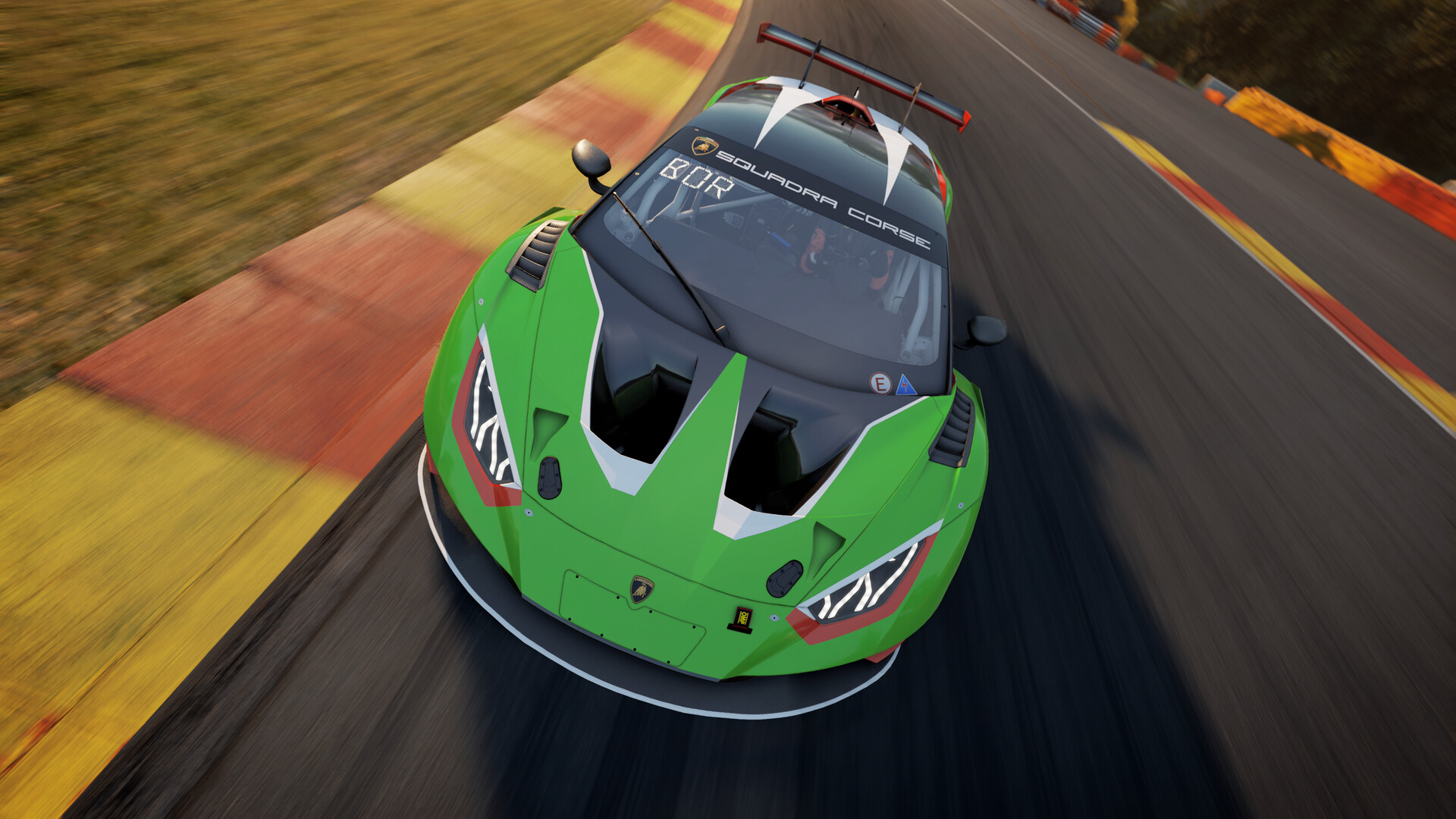
There’s nothing quite like sending the Lamborghini Huracán GT3 EVO2 through Eau Rouge with that naturally aspirated V10 screaming behind your head. It’s raw, it’s fast, and it will punish every sloppy input you throw at it. This isn’t a car for the faint-hearted — but if you’re willing to nail the ACC Lamborghini Huracán GT3 EVO2 setup and drive it with respect, it’ll reward you with some of the most satisfying laps you’ve ever turned in Assetto Corsa Competizione.
Whether you’ve just picked up the EVO2 for the first time or you’re looking to shave those last few tenths at Spa-Francorchamps, this guide has you covered. You’ll learn what makes this car tick, how to set it up properly, and how to attack every corner at Spa with confidence.
- The Huracán GT3 EVO2’s core characteristics and handling traits
- General setup philosophy — aero, suspension, electronics, tyres
- A Spa-Francorchamps-specific setup breakdown
- Corner-by-corner driving tips for Spa
- How the EVO2 compares to other GT3 cars on the ACC grid
Meet the Lamborghini Huracán GT3 EVO2
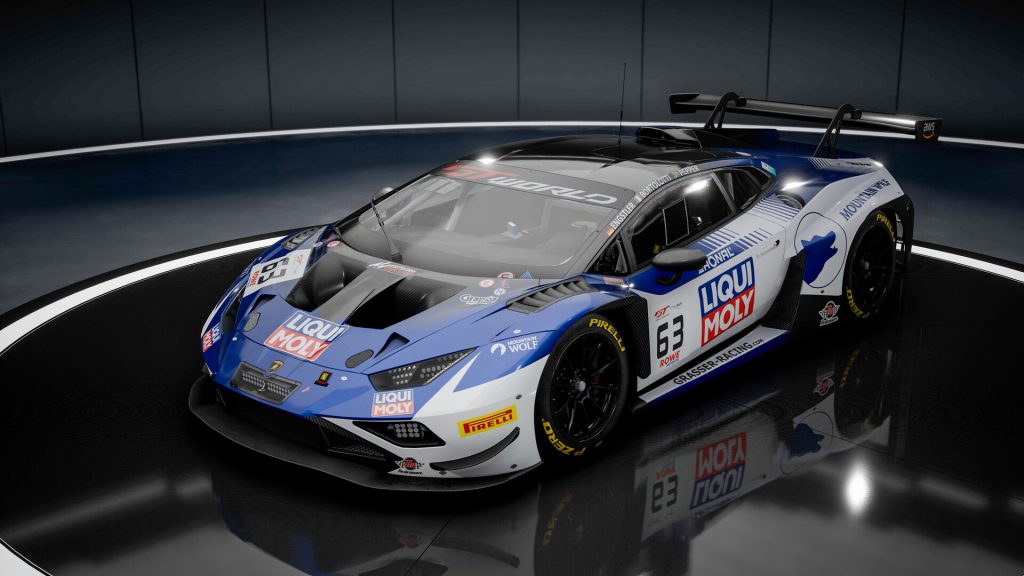
The Huracán GT3 EVO2 is built around a 5.2-litre naturally aspirated V10 that produces around 580 bhp under Balance of Performance regulations. It’s mid-engined, rear-wheel drive, and tips the scales at 1,239 kg. The weight distribution sits at 42% front and 58% rear — a layout that gives you a responsive front end and solid rear traction when you treat the throttle with care.
What sets the EVO2 apart from much of the GT3 field is its power delivery. There’s no turbo lag, no sudden torque spike — just smooth, linear power from idle to redline. You can get on the throttle mid-corner and modulate your way out without the car suddenly snapping sideways. If you’ve driven the original Huracán GT3 EVO, you’ll notice the difference immediately: the snap oversteer that haunted the older car has been tamed in this generation.
The EVO2 also happens to be one of the best braking platforms in ACC. It’s incredibly stable under hard braking, which makes trail braking not just possible but genuinely effective. And when the rain comes? This is where the Lambo truly shines. It’s widely considered one of the strongest wet-weather cars on the grid — consistent, predictable, and fast when everyone else is tip-toeing around.
What You’ll Love (and What Will Bite You)
The Good
- Responsive front end — Turn-in feels intuitive and sharp. You point, and it goes.
- Trail braking heaven — The stable braking platform lets you rotate the car deep into corners.
- Wet weather dominance — One of the best cars in ACC when the track is damp or drenched.
- Low fuel consumption — A genuine strategic advantage in endurance races. You’ll be pitting less than most of the field.
- That sound — The naturally aspirated V10 is, hands down, one of the best-sounding cars in the entire game.
The Challenges
- Demands smooth driving — Aggressive throttle jabs and sharp steering inputs get punished. TC intervention from rough throttle application will silently kill your lap time.
- Very setup-sensitive — Small changes in rear wing have outsized effects on grip and top speed. Getting the balance right takes patience.
- Struggles in heat — High ambient temperatures push tyre temps out of the window. Managing tyre life over a stint in hot conditions is an advanced skill.
- Low-downforce tracks are tough — On circuits like Monza where you can’t lean on aero grip, the difficulty spikes considerably.
ACC Lamborghini Huracán GT3 EVO2 Setup Philosophy
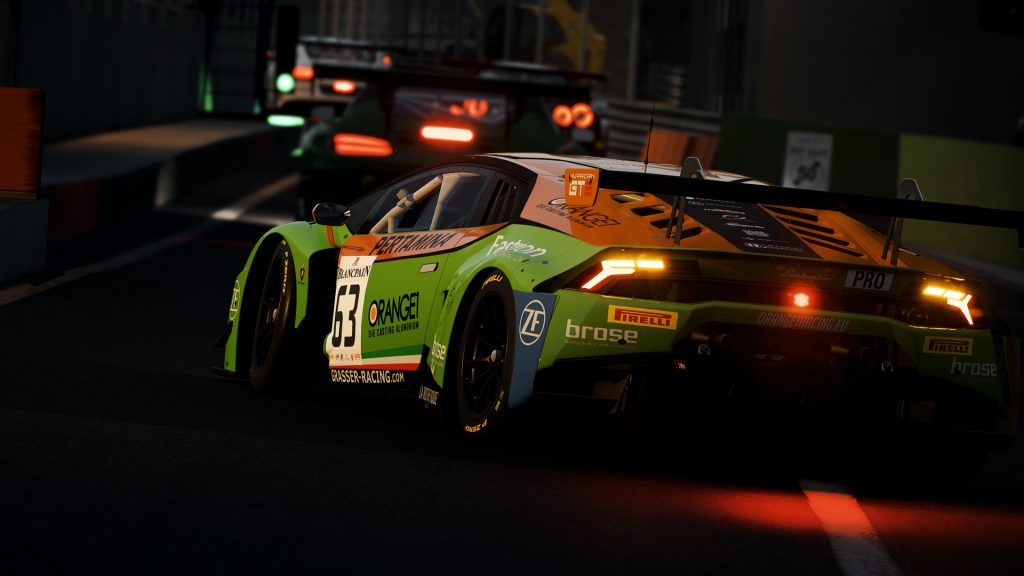
Before you dive into the Spa-specific setup, let’s cover the fundamentals of what makes the EVO2 work. Understanding these general setup principles will help you adapt the car to any circuit in this ACC GT3 car guide.
Aerodynamics
The rear wing is your primary tool for adjusting overall downforce. The EVO2 is extremely wing-sensitive — even a single click can noticeably change the car’s behaviour. Use the front splitter to fine-tune the aero balance between front and rear rather than to add raw downforce.
One of the EVO2’s unique traits is its front aero map. The front end keeps producing peak downforce even during acceleration out of corners, which aids rotation without needing excessive rake. Use softer springs alongside higher wing settings to keep the ride height low at speed — this gives you corner stability without piling on drag.
Suspension
The general formula for the EVO2 is soft springs paired with stiff anti-roll bars. The soft springs maximise mechanical grip and help the car stay planted over kerbs and elevation changes. The stiff ARBs provide the responsiveness and turn-in bite that you’d otherwise lose with softer springs.
- Ride height: Run some rake (front slightly higher than rear). Lower the rear by 1-2 mm for race stints with heavy fuel to counter oversteer.
- Caster: Run high caster to improve slow-speed rotation through tight corners.
- Differential preload: Keep it low for better slow-speed rotation. Increase if you’re experiencing lift-off oversteer.
Tyre Pressures
With the post-v1.9 tyre model, your target operating window is 26.0-27.0 PSI in dry conditions. For qualifying push laps, aim for 26.6-27.0 PSI on your last two flying laps. In wet conditions, target 29.5-30.5 PSI.
Electronics
- Traction Control (TC1): Use it for performance, not as a safety net. Being smooth on the throttle is still essential — heavy TC intervention kills forward momentum. Start around TC 2-3 and adjust per track.
- TC2: A secondary TC layer new to the EVO2, giving you finer control beyond TC1.
- ABS: Start at ABS 2 and adjust based on whether you’re locking fronts in heavy braking zones.
- ECU Maps (1-5): These control engine braking, not power output. Map 1 is the lowest engine braking; Map 5 is the highest. Start around Map 2-4 depending on how much deceleration you want on corner entry.
Brake Bias
Adjust in increments of about 1.5%. Moving bias forward gives you more rotation on entry. Moving it rearward adds rear stability. The EVO2’s braking platform accommodates aggressive trail braking well, so don’t be afraid to lean on the brakes deep into corners.
ACC Spa Setup Guide: Spa-Francorchamps Breakdown
Spa is one of the most demanding tracks on the ACC calendar, and dialling in the Lamborghini ACC setup for Spa-Francorchamps is all about compromise. You need enough straight-line speed for the Kemmel Straight, but you can’t sacrifice the downforce that keeps you alive through Pouhon and Blanchimont. Here’s how to balance it.
Aerodynamics
Set your rear wing to around 2 on the in-game scale as a starting point. This is a compromise — you’ll have decent top speed down Kemmel but won’t feel completely exposed through Sector 2’s high-speed sweepers. If you find yourself struggling for grip through Pouhon and Fagnes, bump the wing up one click and accept the straight-line trade-off.
The recommended overall approach is near-maximum downforce paired with very soft suspensions and high rake. Prioritise front-end grip combined with solid traction for acceleration onto the straights. Use wing 2 as your baseline and adjust upward based on your comfort level through the high-speed sections.
Suspension
- Springs: Very soft — this maximises mechanical grip over Spa’s elevation changes and aggressive kerbs at Bus Stop, La Source, and Rivage.
- ARBs: Stiff, to maintain direction-change responsiveness through the chicanes.
- Bumpstops: Run longer bumpstop lengths with adjusted rates to improve grip on both entry and exit.
- Ride height: High rake configuration. Drop the rear by 1-2 mm for race stints to counter fuel-load oversteer.
- Dampers: Tuned to improve traction on initial power application (critical out of Eau Rouge, La Source, and Bus Stop) and corner entry stability (key for Les Combes and Rivage braking zones).
Electronics
- TC: Start at TC 2-3. Increase if conditions are mixed or you’re dealing with wet patches.
- ECU Map: Map 2-4 works well here. Higher maps provide more engine braking, which helps with the heavy braking zones at Les Combes and Bus Stop.
- ABS: Start at 2. Increase a click if you’re locking fronts into Les Combes or Bus Stop.
- Qualifying: ~2:15.4
- Race pace (30-min stint, 52L fuel): ~2:16.3
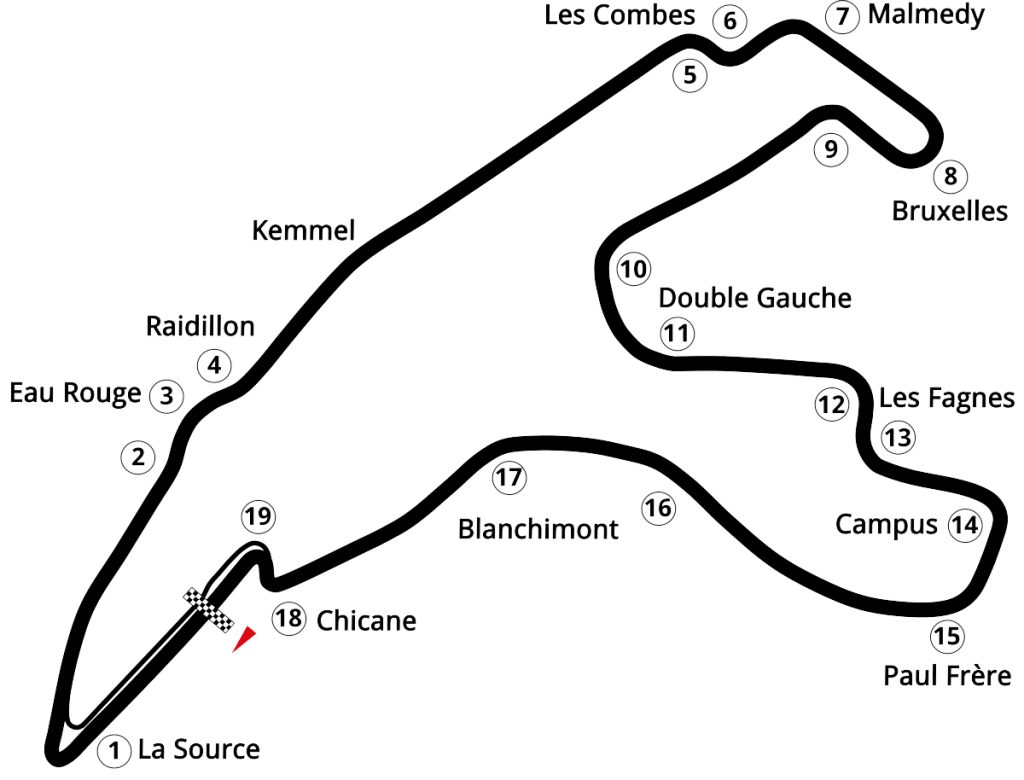
Huracán GT3 EVO2 Driving Tips: Corner-by-Corner at Spa
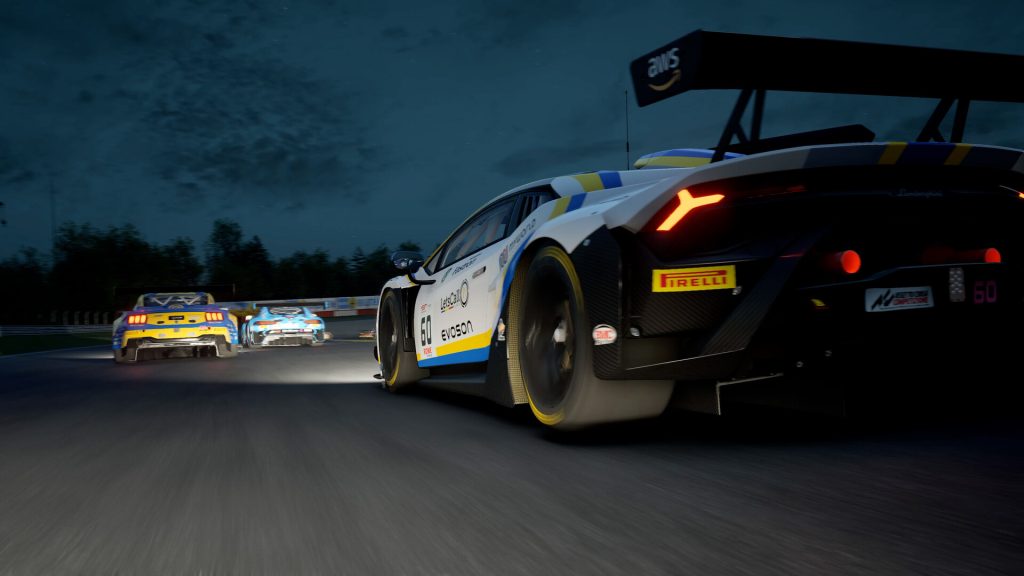
Here’s how to attack each key section of Spa with the EVO2. These Huracán GT3 EVO2 driving tips focus on what matters most: smooth inputs are everything in this car.
La Source (Turn 1)
A tight hairpin right after the start line. The EVO2’s low differential preload and high caster help rotation here. Focus on a clean exit — good traction out of La Source sets up your entire run down to Eau Rouge. Trail brake deep and be patient with the throttle on exit.
Eau Rouge / Raidillon
The big one. With the right setup and commitment, you can take this flat. The EVO2’s strong front end is your best friend here — trust the aero and keep your inputs smooth. If the rear feels nervous, add a click of rear wing. Any hesitation with the throttle mid-corner will unsettle the car more than committing fully.
Kemmel Straight
This is where you pay for every click of rear wing. Make sure you’re getting a clean exit out of Raidillon and use the slipstream in race situations. The EVO2’s low fuel consumption means you’ll be carrying less weight than many rivals by mid-stint — use that advantage.
Les Combes
A hard braking zone followed by quick direction changes. The EVO2’s stable braking platform shines here — trail brake confidently into the left-hander and use the stiff ARBs to change direction cleanly. Brake bias and good ABS settings are critical for this section.
Rivage
A downhill hairpin that rewards trail braking. The EVO2 is exceptional here thanks to its braking stability. Brake later than you think you can, trail into the apex, and roll the throttle on smoothly. This is where the Lambo’s character really shines.
Pouhon
A double-apex high-speed left — one of the most demanding corners on any circuit. You need confidence in the aero grip and absolute precision in your steering inputs. This is the corner that justifies running higher wing. Let the car flow through both apexes and avoid any sudden corrections. If you’re losing the rear here, you need more downforce.
Blanchimont
A near-flat high-speed left-hander. Similar to Eau Rouge — commit fully and trust the aero. The EVO2’s front-end response helps you place the car accurately, but any sudden steering input at this speed will end your race. Smooth and decisive.
Bus Stop Chicane
A tight chicane that tests low-speed traction and direction changes. The NA V10’s linear power delivery is a genuine advantage on exit here. Use the stiff ARBs to snap the car through the direction changes, and be smooth on the throttle as you exit onto the pit straight.
How It Stacks Up Against the Competition
The Huracán GT3 EVO2 is a strong all-rounder in the current ACC meta, but it’s not the outright fastest on every track type. Here’s a quick snapshot of where it stands.
| Scenario | EVO2 Strengths | Where Others Have the Edge |
|---|---|---|
| High-speed tracks (Spa, Silverstone) | Strong in Sector 2, good all-round pace | Audi R8 GT3 EVO II is the current leader here |
| Medium-speed tracks (Barcelona, Misano) | Good rotation in technical sections | Porsche 992 GT3 R excels on these layouts |
| Low-speed tracks (Brands Hatch, Zolder) | Decent, but not its strongest suit | Mercedes-AMG GT3 EVO dominates tight circuits |
| Wet conditions | Top-tier — one of the best in the rain | Few cars can match it here |
| Endurance races | Low fuel consumption, exceptional consistency | A genuine strategic advantage over the field |
Compared to the Ferrari 296 GT3, the Lambo’s NA V10 gives you smoother corner exits and no turbo lag to manage. Against the BMW M4 GT3, the EVO2 is more demanding but rewards skill with better rotation and wet pace. The Porsche 992 beats it on medium-speed tracks, and the Audi R8 GT3 EVO II currently holds the edge at high-speed circuits — but the Lambo’s versatility across the full calendar is hard to match.
Quick Reference Setup Summary
| Setting | General Baseline | Spa Adjustment |
|---|---|---|
| Rear Wing | Medium (track-dependent) | ~2 (compromise for straights vs. high-speed corners) |
| Springs | Soft | Very soft (elevation changes, kerbs) |
| ARBs | Stiff | Stiff (direction changes at Les Combes, Bus Stop) |
| Ride Height | Rake (front > rear) | High rake; rear -1-2 mm for race fuel |
| Tyre Pressure (Dry) | 26.0-27.0 PSI | Same target window |
| Tyre Pressure (Wet) | 29.5-30.5 PSI | Same target window |
| TC1 | 2-3 | 2-3 (increase in mixed conditions) |
| ABS | 2 | 2 (increase if locking into Les Combes) |
| ECU Map | 2-4 | 2-4 (higher = more engine braking for heavy zones) |
| Brake Bias | Adjust in ~1.5% increments | Fine-tune for trail braking at Rivage, Les Combes |
Frequently Asked Questions
It’s significantly easier to drive than its predecessor, the original Huracán GT3 EVO, but it’s still not the most beginner-friendly car in ACC. If you’re brand new, the BMW M4 GT3 is a more forgiving starting point. Once you’ve built clean, smooth driving habits, the EVO2 becomes an excellent next step.
Start at wing 2 on the in-game scale and adjust from there. If you’re comfortable through Pouhon and Blanchimont, you can try dropping it for more straight-line speed. If the rear feels unstable in high-speed corners, go up a click. It’s always a compromise at Spa.
The extra weight shifts the balance toward oversteer, especially in the rear. Drop your rear ride height by 1-2 mm for race stints compared to your qualifying setup. This helps counter the fuel-load-induced oversteer that most drivers notice on the opening laps.
The Audi currently holds an edge in outright pace at high-speed circuits like Spa, particularly in Sector 1 and Sector 3 straights. However, the Lambo is competitive in Sector 2 and has a significant advantage in wet conditions and fuel efficiency over longer stints.
The Lamborghini Huracán GT3 EVO2 isn’t the easiest car in ACC, and it’s not always the fastest. But when you get the ACC Lamborghini Huracán GT3 EVO2 setup dialled in and drive it the way it wants to be driven — smooth, precise, committed — there are few cars on the grid that feel this good. The V10 soundtrack alone is worth the effort.
Get out on track, put in the laps, experiment with the setup values in this ACC Spa setup guide, and find what works for your driving style. Spa is one of those tracks where every session teaches you something new. See you out there.